Montmaray Book Giveaway Winners

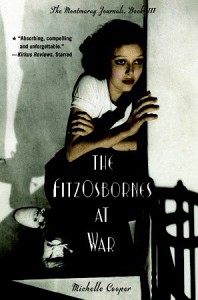
'The FitzOsbornes at War' title=

Thank you to everyone who shared some favourite book titles with us over the past fortnight. As always, there are lots of interesting recommended reads, and I’ve made a note of all of them in my book journal. Big congratulations to Kirsty, Alex and Hilde, who have each won a Montmaray book.

Thanks also to the American Ambassador to Montmaray for her continuing efforts to promote Montmaray. (By the way, Your Excellency, you’re allowed to resign your ambassadorial post whenever you like. Especially if you get a better offer from some other fictional kingdom. Narnia, say, or . . . actually, I can’t think of any others right now. But they probably offer better pay and working conditions.)

Also, the paperback edition of The FitzOsbornes at War1 is out now in North America. Very exciting!

_____

  1. I’m pretty sure the book cover’s not as green and fuzzy as my picture suggests. Although maybe that’s a marketing strategy . . .
    PERSON BROWSING IN BOOKSHOP: Hey, look at this weird book! Why is it all green and fuzzy? Hmm . . . Kirkus says on the cover that it’s “absorbing, compelling and unforgettable.” I must buy this book at once!
    RANDOM HOUSE MARKETING PERSON HIDING BEHIND SHELVES: Rubs hands with glee. Places another green, fuzzy copy of ‘The FitzOsbornes at War’ on shelf.

The Great Big Montmaray Book Giveaway

The paperback edition of The FitzOsbornes at War comes out in North America in two weeks, so I thought I’d hold a Montmaray giveaway to celebrate.

A stack of Montmaray books

Would you like to win one of the Montmaray books pictured above? If so, leave a comment below telling us about one of your favourite books, one that you’d like to recommend to other readers. You can write as much or as little as you want about the book. It can be any sort of book at all (although, ideally, it will be a book we haven’t heard much about, one that you think deserves more appreciation). I’ll choose three comments at random, and those three comment-writers can then let me know which Montmaray book they’d like me to send them. Of course, you may have read all the Montmaray books already, but perhaps you borrowed them from the library and would like your own, personally signed, copy? Or perhaps you’d like to give one to a friend?

Conditions of entry:

1. This is an international giveaway. Anyone can enter.

2. Make sure the email address you enter on the comment form is a valid one that you check regularly, so I can contact you if you win. No one will be able to see your email address except me, and I won’t show it to anyone else. Please don’t include your real residential or postal address anywhere in the comment. However, it would be nice if you mentioned which country you live in, because I’m curious about who reads this blog.

3. The three winners will be chosen at random, unless there are three or fewer comments – in which case, it won’t be random and all will win prizes.

4. Each winner can choose one of the Montmaray hardcovers or paperbacks pictured above, or one of the CD audiobooks of either A Brief History of Montmaray or The FitzOsbornes in Exile (not pictured above, but they do exist). See my book page for a list of the available books and audiobooks. Please note that I have lots of the North American editions, but not so many of the early Australian books. I’ll try to give each winner his or her first choice of book, but if all three winners want, say, an Australian first edition of A Brief History of Montmaray, then whoever emails me back first will get their first choice and the others might have to choose a different Montmaray book.

5. Entries close at 9:00 am Eastern Daylight Time in the US on the 8th of October, 2013, which is when the Ember paperback edition of The FitzOsbornes at War goes on sale in North America. The three giveaway winners will be emailed then, and I will post off the winners’ books as soon as possible after that.

6. This contest and/or promotion is not sponsored or authorised by Random House Australia. Random House Australia bears no legal liability in connection with this contest and/or promotion.

Off you go – recommend a book for us in the comments below. Good luck!

Science Reads: ‘Chocolate Consumption, Cognitive Function, and Nobel Laureates’ by Franz H. Messerli

To end Science Reads Week on a lighter note, I’d like to draw your attention to an article1 published in The New England Journal of Medicine last year, which investigates whether eating chocolate makes you smarter. Dr Messerli notes that dietary flavanols, found in dark chocolate, green tea and red wine, have been shown to improve the blood supply to the brain and cause rats to perform better on cognitive tests. He also notes that countries with a high consumption of chocolate, particularly Switzerland, tend to produce a lot of Nobel laureates. When he analyses the data, he finds “a surprisingly strong correlation” between chocolate intake and the number of Nobel Prizes won in a given country. Unfortunately, Sweden messes up his results. But don’t worry, Dr Messerli has an explanation:

“Given its per capita chocolate consumption of 6.4 kg per year, we would predict that Sweden should have produced a total of about 14 Nobel laureates, yet we observe 32. Considering that in this instance the observed number exceeds the expected number by a factor of more than 2, one cannot quite escape the notion that either the Nobel Committee in Stockholm has some inherent patriotic bias when assessing the candidates for these awards or, perhaps, that the Swedes are particularly sensitive to chocolate, and even minuscule amounts greatly enhance their cognition.”

Yes, the article is completely tongue-in-cheek. However, I feel this issue needs further investigation, so I’m off to eat some Lindt 70% Dark Chocolate. Purely in the interests of scientific investigation, you understand. Happy ‘Science Reads Week’ to you all, and may your own scientific investigations be similarly delicious!

_____

  1. Sorry, this article is now only available to NEJM subscribers.

Science Reads: ‘Knowledge is Power: How Magic, the Government and an Apocalyptic Vision inspired Francis Bacon to create Modern Science’ by John Henry

Today’s Science Read is an odd but fascinating book about Francis Bacon, who is often credited with being the founder of ‘Modern Science’, although the truth is far more complex. Now, I have to admit that my knowledge of Francis Bacon was fairly patchy before I picked up this book. My mental card file on him looked something like this:

FRANCIS BACON
– Lived in 1500s? 1600s?
– Wrote some books about philosophy
– Jumped out of his carriage to grab a chicken, kill it and stuff it with snow, in order to see if ice could preserve flesh; consequently died of pneumonia due to exposure
– Not to be confused with the Francis Bacon who painted all those grotesque portraits

In other words, I knew almost nothing about him. However, I can now reliably inform you that Francis Bacon (no relation to the artist) was born in 1561; became Lord Chancellor to King James I; wrote a LOT of books, including one of the first Utopian novels; influenced a range of scientists, from Newton to Darwin, and inspired the establishment of the Royal Society, the oldest and most prestigious scientific institution in Britain; and died in 1626, although his death probably had nothing to do with iced-chicken experiments.

'Knowledge is Power' by John HenryJohn Henry gives a clear description of Bacon’s main themes, which were that society was on the verge of a flowering of knowledge about how the universe worked; that this knowledge should be used for the benefit of humankind; and that science would be best developed within a bureaucratic structure funded by the government but free of political and religious bias, and staffed by a huge army of workers gathering, tabulating and interpreting information. Even Henry acknowledges that important scientific advances have never happened within this type of bureaucratic structure, but he argues convincingly that Bacon’s ideas were very influential, if sometimes misinterpreted, by philosophers and scientists during the Enlightenment and afterwards.

Henry also does an excellent job of describing Bacon’s world, one quite alien to those of us living in twenty-first century secular democracies. For example, in Bacon’s time, it was completely rational to believe in God and whatever the Church currently decreed was a ‘fact’ (regardless of whether it really was true), because otherwise, you’d find yourself convicted of heresy and burnt at the stake. Words such as ‘magic’, ‘science’ and ‘atheist’ had completely different meanings then. ‘Magic’, for example, was not about supernatural powers, but about discovering the ‘correspondences’ between natural substances (for example, between magnets and iron) and ‘natural magic’ was what we might think of as primitive science. While a magician might (unwisely) choose to summon a demon, this would only be to help the magician learn about these natural correspondences more quickly. A demon had knowledge but no supernatural powers and could not do anything miraculous, and the Church frowned upon demonology only because demons were known to exploit humans and could endanger a magician’s immortal soul. Henry also explains how Bacon’s devout Calvinist upbringing and conviction that the End of Days was nigh1 had a significant influence upon his philosophy.

The design of this book was a bit odd, and at first I wondered if it was self-published, but no, it seems it’s part of a series of science-themed books published by Icon Books in the UK and Totem Books in the US. There was a glossary, but no index; there were a few footnotes, but they referred to only four texts; there was some very dense and academic information, but it was presented in a conversational style with lots of droll asides from the author. It’s as though the publishers weren’t exactly sure who the audience for this book would be, but I found it very interesting and readable. Those who know a lot about Francis Bacon probably won’t find much new in this book, but I’d recommend this for those who don’t know much about him but are interested in the history of science.

Tomorrow in Science Reads: Chocolate Consumption, Cognitive Function, and Nobel Laureates by Franz H. Messerli

_____

  1. While ‘apocalypse’ implies destruction and chaos to us, to Bacon it meant a time when the old, flawed world would be replaced with a glorious new world, full of knowledge and contentment. While it was true that this would mean the destruction of unworthy humans (Catholics, Jews, Muslims, heathens, etc), Bacon knew that he, as an Englishman and the ‘right’ sort of Protestant Christian, would be one of the saved, so he eagerly awaited Judgement Day.

Science Reads: ‘Unweaving the Rainbow’ by Richard Dawkins

Today in Science Reads, I’d like to talk about a book that argues that scientific knowledge enhances, rather than destroys, our sense of wonder about the universe. In Unweaving the Rainbow, Richard Dawkins has written a rebuttal to John Keats’s idea that Isaac Newton “destroyed all the poetry of the rainbow by reducing it to the prismatic colours”. For the most part, Dawkins does this clearly, effectively and with a sense of humour. There are fascinating discussions about astronomy, sound perception, forensic DNA testing and how genetics can reveal information about the ancestral environment of a particular species. My favourite chapter was about how Uncanny Coincidences (for instance, your horoscope correctly predicting your future, or a TV magician making wristwatches stop or start with the power of his mind) are usually not very uncanny at all, once you use probability mathematics and scientific logic to work out how likely it is that these events will occur.

Dawkins also discusses how scientists can sometimes get a bit carried away with using ‘poetical writing’ to convey their ideas, at the expense of clarity and accuracy. This was the part of the book where I felt Dawkins forgot his central thesis and got a bit carried away himself, on tangents that were not very interesting. Unfortunately, he also devotes a few pages of this book to one of his pet peeves – “feminist bullies” who apparently try to prevent young women from studying science because it’s the “brainchild of white Victorian males”. Now, as a woman who has studied science and worked in a couple of science-related fields, I feel I have a bit more personal experience in this area than Richard Dawkins, and I have to say that all the people who tried to discourage me from science were not feminists, but sexist men, starting with my Year Eleven Physics teacher, who informed us that girls didn’t have the right sort of brains to understand Maths and Physics1. This attitude was shared by male staff teaching Pure Mathematics at the university I subsequently attended.2 In fairness to Dawkins, Unweaving the Rainbow was first published in 1998, and his more recent books, such as The God Delusion, seem far less anti-feminist. Perhaps his views have matured, or perhaps his publishers pointed out to him that women read books about science, too, and that annoying the people who have bought his book is a bad business strategy.3 Anyway, this is a small part of an interesting, entertaining and often inspirational book, which I recommend with some reservations.

Tomorrow in Science Reads: Knowledge is Power: How Magic, the Government and an Apocalyptic Vision inspired Francis Bacon to create Modern Science by John Henry.

_____

  1. I would have made a rude gesture at this Physics teacher from the stage of our school assembly hall the following year, when I was awarded the school prizes for Physics and Chemistry, but fortunately for everyone, he’d retired by then.
  2. Although I should point out that the (male) Applied Maths lecturers were so enthusiastic and fun that I briefly considered becoming a statistician. And my (male) Chemistry professor was similarly encouraging.
  3. I don’t think his views have matured very much, given some of the things Dawkins has said in response to women being sexually harassed and assaulted at atheist conferences.