‘Dated’ Books, Part Seven: Swallows and Amazons

A note for the benefit of those new to this series: ‘dated’ means ‘of its time, not ours’. ‘Dated’ books can be horribly offensive to modern sensibilities, or they can be charmingly nostalgic, or they can simply be a bit . . . odd. I found Swallows and Amazons by Arthur Ransome fell mostly into the ‘charmingly nostalgic’ category, apart from a couple of cringe-worthy scenes, which I shall discuss below. But first, have a look at the gorgeous old edition I read!

'Swallows and Amazons' by Arthur Ransome

I love how, whenever I reserve a children’s book at my library, they give me the most ancient edition in existence, which I imagine they have to dig out of a wooden trunk in the deepest, darkest basement of Sydney Town Hall. This is a 1949 edition from ‘The Australasian Publishing Co. Pty. Ltd’, with a fraying, faded olive-green cloth binding. It’s so old, it has one of those cardboard pockets in the back, containing an orange card with the book’s details handwritten in blue ink. It’s so old, it has a flimsy bit of paper stuck in for date stamps1. It’s so old, it has an illustrated ‘Ex Libris’ book plate in the front proclaiming the book belongs to the ‘City of Sydney Public Library JUVENILE SECTION’2. This book even smelled nice (not a nasty, mouldy old-book smell, but a nice, dry, old-paper scent).

Anyway, to return to the datedness of the story itself. The main reason I think this book is dated is the central premise. How many modern-day middle-class English parents would allow their four pre-adolescent children to sail off by themselves to a deserted island for an extended camping holiday, when the youngest is seven years old and CANNOT SWIM? True, the island is a short boat trip from the mainland, and they visit a nearby farmer each day to collect fresh milk3 and bread, and their mother sails over a few times to make sure they haven’t drowned, set themselves on fire or died of malnutrition, but STILL!

Of course, the children prove to be sensible, capable and independent, as most children in the 1920s were. The Walker siblings put up their own tents, cook their own meals (often consisting of fish they’ve caught themselves), sail up and down the lake, have a ‘war’ with a couple of local girls and their grumpy uncle, and even manage to outwit some (admittedly, not very bright) burglars. Actually, the detailed descriptions of the children’s life on the island were my favourite parts of the story. Among other things, I learned how to sew and erect a tent, how to turn a pine tree into a lighthouse, and how to build a camp fire. (The very detailed explanations of how to sail a boat were not as interesting to me, but children who can sail would probably love these bits.) I also enjoyed the descriptions of the lake’s wildlife, such as the dipper bird “under water, flying with its wings, as if it were in the air, fast along the bottom of the lake”.

However, the children’s constant talk of ‘natives’ and ‘savages’ quickly became tiresome. Some critics argue that this sort of talk isn’t racist, because the children don’t actually insult or belittle the ‘natives’, and anyway, the ‘natives’ aren’t real. I think that’s rather disingenuous, when it’s made clear that Mrs Walker grew up in Australia4, and the book contains dialogue such as this:

“‘This is where the savages have had a corroboree,’ said Titty. ‘They cooked their prisoners on the fire and danced around them.'”

Her mother goes along with this ‘joke’,

“telling how she had nearly been eaten by savages, and had only escaped by jumping out of the stew-pot at the last minute.”

This sort of talk was perfectly acceptable in 1930, but is not so funny now, especially when there are politicians in Australia who have used the supposed ‘cannibalism’ of Aboriginal Australians to justify racist policies.

The book also reflects the attitudes to class in 1920s England. In one scene, Nancy, the young daughter of a local land-owner, berates a policeman who is, quite reasonably, asking the Walker children if they know anything about a nearby burglary:

“‘Sammy, I’m ashamed of you. If you don’t go away at once, I’ll tell your mother . . . Run away, Sammy, and don’t make those mistakes again.'”

Apparently, it’s fine for a child to chastise and humiliate an adult who’s simply doing his job, if the child is rich and the adult is the mere son of a servant.

I was also a little worried at first that this would be a book where the boys did all the exciting stuff while the girls did the housework, and indeed, Susan does do all the cooking and most of the cleaning on the island (she and her sister also wear frocks, which you’d think would be a bit impractical for sailing). In addition, their mother, a competent and intelligent woman bringing up five children by herself while her husband is at sea, has to write to ask his permission when the children want to camp on the island. However, Nancy proves to be quite good at destroying gender stereotypes. She wears breeches, can out-sail, out-shoot and out-plan John, and generally bosses everyone around. Also, Susan’s unfortunately-named younger sister Titty5 ends up saving the day several times during the course of their holiday SPOILER ALERT! by firstly, capturing Nancy’s boat during the ‘war’ and secondly, finding the treasure buried by the burglars OKAY, SPOILERS FINISHED NOW.

Overall, I enjoyed the children’s adventures, which were exciting but plausible (well, more plausible than anything the Famous Five got up to). I liked reading about such competent, good-hearted child characters, and I know I would have loved this book to bits if I’d come across it as a young reader. (Although I’m pretty sure that even then, I’d have raised an eyebrow at the racism.)

More ‘dated’ books:

1. Wigs on the Green by Nancy Mitford
2. The Charioteer by Mary Renault
3. The Friendly Young Ladies by Mary Renault
4. Police at the Funeral by Margery Allingham
5. Emil and the Detectives by Erich Kästner
6. The Wind in the Willows by Kenneth Grahame
7. Swallows and Amazons by Arthur Ransome
8. Kangaroo by D. H. Lawrence

_____

  1. This book was in great demand in 1957 (borrowed three times!) but left the library only six times between then and 2003.
  2. It’s been a very long time since the City of Sydney had only one library, and I’m pretty sure the term ‘juvenile’ went out of fashion a couple of decades ago.
  3. Unpasteurised milk, straight from the cow, poured into an unsterilised milk-can! Because I am a persnickety grown-up with a science degree, I kept thinking, “I hope those cows have been tested for TB.”
  4. Slightly off-topic, I was puzzled by one of Mrs Walker’s tales about her childhood, when she described “the little brown bears that her father caught in the bush, and that used to lick her fingers for her when she dipped them in honey.” What is she talking about? Koalas? Possums? But they’re grey, not brown (unless they’ve been rolling in red dirt). She describes kangaroos separately, and anyway, kangaroos are not very bear-like. Maybe wombats? Do they like honey? Would any rational person put his or her fingers anywhere near a wombat’s mouth?
  5. This seemed such an odd name, even for the 1920s, that I had to investigate further. Apparently, three of the Walker children were named after real friends of the author, the Altounyans. Titty’s name, “the nickname of the real life Mavis Altounyan, from Joseph Jacobs’s children’s story, Titty Mouse and Tatty Mouse, has caused titters among generations of children, causing it to be changed to Kitty in the original BBC adaptation of the book”.

Five Books, Five Songs: Doing the Lambeth Walk

“We play a different way
Not like you, but a bit more gay . . .”

Poor Sophie and her family have a lot to contend with in The FitzOsbornes in Exile, what with governesses trying to turn them into young ladies and aunts trying to marry them off to vile bachelors and assassins trying to shoot them. It’s a good thing they have Julia to distract them from their worries. For instance, she tells the FitzOsbornes all about Me and My Girl, which she has just seen in the West End, and then she teaches them her favourite song and dance from the show. Here’s a clip from a more recent Broadway production, starring Robert Lindsay as Bill, the Cockney barrow boy who shows the Mayfair toffs how to do the Lambeth Walk.

More in Five Books, Five Songs:

1. The Rage of SheepHester’s Request
2. A Brief History of MontmarayThe Sea Is Writhing Now
3. The FitzOsbornes in Exile – Doing The Lambeth Walk
4. The FitzOsbornes at WarWe’ll Meet Again
5. The Work-in-Progress – Through The Large Four-Chambered Heart

My Favourite Books of 2012

Here are the books I read this year that I loved the most.

But first, some statistics!

I read 72 books this year, plus approximately 7,853 articles in scientific journals (this last number may be a slight exaggeration). I’m sure you really, really want to see some pie charts about the books I read, so here you go:

Books I read in 2012 by genre

I read lots more children’s books this year than I usually do.

Books I read in 2012 by writers' nationality

Hmm, that is not very diverse, is it? I only read three books that had been translated into English, too.

Books I read in 2012 by writers' gender

That’s probably typical of my reading habits. It’s not that I deliberately try to read more women writers than men, it simply works out that way most years.

Now for my favourites.

My favourite children’s books

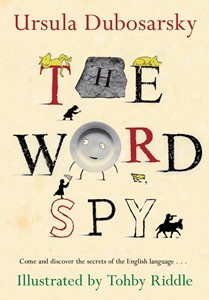
'The Word Spy' by Ursula Dubosarsky and Tohby RiddleI absolutely loved Saffy’s Angel by Hilary McKay, which I have previously written about here. I also liked Amelia Dee and the Peacock Lamp by Odo Hirsch, a sweet, charming story about a girl who is inspired to write stories by a mysterious brass lamp she finds in her house. This has many of the usual elements of an Odo Hirsch book (eccentric but benevolent parents, a carefully multicultural cast of characters, a vaguely European setting), but I found Amelia especially endearing and the lessons she learned (that it takes courage to share your thoughts with others; that other people often have complex motivations for their actions; that unchecked anger harms yourself, not just others) were exactly what I needed to think about at the time.
Other books I enjoyed included The Word Spy, an entertaining non-fiction book about the history of the English language, written by Ursula Dubosarsky and illustrated by Tohby Riddle, and Al Capone Shines My Shoes by Gennifer Choldenko, about a boy whose father is a guard at Alcatraz Prison in 1935.

My favourite Young Adult novel

This year I read quite a few YA books that had received plenty of acclaim, but I ended up feeling underwhelmed by a lot of them. I could certainly understand why the books had been praised, but they just weren’t my cup of tea. Sometimes they had beautiful sentence-level writing, but the voice seemed implausible for the teenager who was supposed to be narrating the story. Sometimes they had a great narrator and fascinating premise, but the structure of the novel didn’t work for me. One book I’d seen described as ‘feminist’ was . . . really, really not feminist at all. Maybe my expectations had been raised too high by the hype. Anyway, my favourite YA book of 2012 turned out to be a book first published in 1910, long before the concept of ‘Young Adult literature’ existed. The book was The Getting of Wisdom, by Henry Handel Richardson, which I’ve previously written about here.

My favourite novels for adults

'At Last' by Edward St AubynI found At Last by Edward St Aubyn quite as harrowing as I’d expected, but also hopeful and consoling and unexpectedly funny. It’s the fifth in a series of novels about Patrick Melrose, who was born into a wealthy, aristocratic family and was then subjected to appalling childhood abuse and neglect by his parents. In this book, Patrick has finally overcome his drug and alcohol addictions and is trying to cope with his marriage breakdown, when his mother dies. The novel is elegantly structured around her funeral, allowing a lot of thoughtful commentary on the nature of death, forgiveness and free will, but also some hilarious descriptions of the idle rich. Patrick’s awful relatives and family friends are mostly ‘old money’ who’ve never worked a day in their lives, but complain constantly about how difficult their existence is. I know this all sounds very grim and this book certainly isn’t for everyone, but I thought it was fascinating and beautifully written.

I also enjoyed Insignificant Others by Stephen McCauley and The Beginner’s Goodbye by Anne Tyler, which I’ve previously written about here. I’m currently halfway through Restoration by Rose Tremain and loving it, so I suspect this book will make it onto my 2012 favourites list, too.

My favourite non-fiction for adults

I read some terrific biographies this year, including A. A. Milne: His Life by Ann Thwaite and Rosalind Franklin: The Dark Lady of DNA by Brenda Maddox. I wrote about both books here. I also enjoyed Alex and Me, by Irene M. Pepperberg, about a very smart parrot.

I will not bore you with my To Read list for 2013, especially as it contains approximately 2,147 scientific articles1 that I didn’t get around to reading this year (this number may be a slight exaggeration).

Hope you all have a happy and peaceful holiday season, and that 2013 brings you lots of great reading.

More favourite books:

1. Favourite Books of 2010
2. Favourite Books of 2011

_____

  1. Yes, it’s research for my next book. The book that was supposed to need far less research than my last book. Ha ha ha.

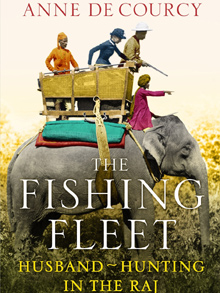
The Fishing Fleet: Husband-Hunting in the Raj by Anne de Courcy

'The Fishing Fleet' by Anne de CourcyI’ve enjoyed Anne de Courcy’s previous social histories and biographies, so when I saw her latest book was about India, I was keen to read it. As usual, her subject is posh English people, circa 1850 – 1950, but this time she has focussed on the young English women who sailed to India to find themselves husbands. The first such ‘Fishing Fleet’ arrived in Bombay in 1671, the women having been paid generous allowances by the East India Company. However, by the middle of the nineteenth century, there was no need to provide incentives to prospective brides. The only respectable career for a Victorian ‘gentlewoman’ was that of wife and mother, but there were far more unmarried women than eligible bachelors in England. Women who were neither rich nor pretty enough to snare a husband knew they’d have a much better chance in India, where white men outnumbered white women by four to one and were forbidden (by their terms of employment and social custom) from marrying females with any tinge of ‘native blood’.

Anne de Courcy uses memoirs, letters, diaries and interviews to provide fascinating details of these ‘husband-hunters’. First, there was the arduous sailing trip (all the way around Africa before the Suez Canal opened in 1869), the poor women having to contend with cramped living space, sea sickness, limited fresh food and other inconveniences:

“Fresh water for washing clothes was in such short supply that many women who knew they were going to travel saved their most worn underwear and then discarded it overboard on the voyage, leaving, one imagines, a trail of dirty, threadbare nightdresses across the Indian Ocean.”

Arriving in Bombay or Calcutta, the young woman was often overwhelmed by the heat, the dust, the smells, the “teeming mass of people”. She was then flung into India’s version of ‘the Season’, attending (depending on her social rank) Viceregal balls and banquets, dinner parties, tea dances, picnics, tennis parties and tiger-hunts. Couples often became engaged after only one or two brief meetings, the men desperate for companionship after years of celibacy, the women anxious to avoid the mortification of being sent home as a ‘Returned Empty’ (that is, a failed husband-hunter). Most military and Indian Civil Service men weren’t permitted to marry until they were at least thirty, which meant bridegrooms were often several decades older than their teenage brides and could be unwilling or unable to change their bachelor lifestyles. One beautiful and cosseted young woman, who wed in 1932, found herself living on a remote tea plantation, miles from her nearest white neighbour, with no transportation, no electricity and nothing to do. Her much older husband spent all his time working or hunting with his hounds and horses and forgot her twenty-first birthday, and her child was delivered by the local vet because there was no doctor available. Still, “Sheila was a true daughter of the Raj, brave and uncomplaining” and later told her daughter that she always dressed in an evening gown for dinner because “it was felt that one must keep up standards and not let oneself go native.”

Actually, Sheila had it relatively easy. Other women were shot at by mutinous ‘natives’, while some were caught in avalanches and earthquakes. Women died of cholera, smallpox, malaria and even bubonic plague. Infants were particularly vulnerable to diseases, and those who survived were routinely sent off to boarding school in England from the age of six, so their mothers had the agonising choice of being separated for years at a time from either their husband or their small children. And then there was the wildlife – panthers that snatched pet dogs from gardens and golf courses, snakes that slithered up through drainage holes into bathrooms, scorpions hidden in shoes, rats under the bed and monkeys that stole silver spoons from the table. One young woman awoke to find a civet cat drinking from her bedside glass of milk.

What I found most interesting was how British India was far more patriarchal and snobbish than Britain itself. By the twentieth century, it was possible for a working-class man with a great deal of intelligence, talent and luck to rise as high as Prime Minister, and for a well-born woman to become a Member of Parliament. This was impossible in India, where women had no status at all and “the hierarchy of the Raj position was fixed, according to service, rank and seniority in an unalterable grading . . . within which there was room for petty nuances that could be painful and damaging.”

Everyone was obsessed with their own and everyone else’s social precedence, and in a small society where nothing was private, it was thought essential to ‘keep up with the Joneses’. Those who could barely afford it still kept polo ponies, paid expensive subscriptions to clubs and held elaborate dinner parties, and there was little tolerance for those regarded as ‘intellectuals’.

The stories in this book are mostly of upper-class British women, rather than, say, the women who went to India as teachers, nurses and missionaries. There are also few mentions of Indians, apart from some anonymous, silent servants and the Maharajah of Patiala, who married Miss Florence Bryan in 18931. The author clearly feels that Britain’s colonisation of India was a very good thing – after all, most of the Indian rulers prior to colonisation were cruel despots (true, but so were the rulers of most countries in the eighteenth century) and the British “left India, after independence, with an enviable infrastructure, a democratic Government and a common language”. (The book makes only passing mention of the terrible famines that resulted from the British forcing Indian farmers to grow jute and cotton, rather than food2, and of the violent suppression of pro-independence Indians3.)

'Heat and Dust' by Ruth Prawer JhabvalaDespite these reservations, the book is recommended for those interested in reading about British women’s experiences in India. But I think novels can be just as useful for this purpose, so here are some of my favourites:

Heat and Dust by Ruth Prawer Jhabvala
A Passage to India by E. M. Forster
The Jewel in the Crown and other novels in the Raj Quartet by Paul Scott
Black Narcissus by Rumer Godden4
Coromandel Sea Change by Rumer Godden
(Actually, read all of Rumer Godden’s India books, because she’s brilliant. Anne Chisholm also wrote an excellent biography, Rumer Godden: A Storyteller’s Life.)
– And for a slightly different look at Europeans in India, there’s also Baumgartner’s Bombay by Anita Desai.

_____

  1. It was a “brief and unhappy” marriage. She was shunned by both Indians and Europeans, her infant son was poisoned, and she died of pneumonia three years later.
  2. Up to ten million Indians died in the famine of 1876-8, and a similar number in 1899-1900.
  3. For example, hundreds died at Amritsar in 1919, when British troops fired on unarmed protesters.
  4. Black Narcissus was made into a hilariously bad film in 1947. In one memorable scene, the mad nun flees through a Himalayan ‘jungle’ inhabited by kookaburras.