‘Growing Up Gracefully’, Part Three

Each chapter of Growing Up Gracefully has a short introduction by Noel Streatfeild and her introduction to ‘Manners Abroad’ contains the following sage advice for those travelling to Australia:

“I remember being surprised when, on my arrival at Menzies Hotel in Melbourne, the lift-boy took my book from under my arm, read the title, and said casually, ‘I’ll have a read of that when you’re through.’ But a very short time spent in Australia showed me his were not bad manners, as I had first supposed, but merely new manners with which I was not familiar. The boy was asserting in a friendly way that he might be a lift-boy, and I a guest in the hotel, but we had tastes in common.”

Miss Streatfeild also experienced some differences between British and American manners:

“One of the freedoms on which Americans most pride themselves, for which, in fact, many of their forebears left the lands of their birth to become Americans, is the right to speak their minds on any and every subject … We may sometimes think more guarded speech would be better manners, but Americans do not feel like that. They believe speaking out is good manners, and keeping your thoughts to yourself hypocrisy. Maybe they are right. But right or wrong, what we consider good manners when abroad remains unchanged, so whatever we may think of foreigners and their countries we must Keep Our Thoughts To Ourselves.”

'Manners Abroad', illustration by John Dugan

Miss Virginia Graham then provides lots of useful hints for travelling abroad, which can often be challenging:

“A lot of irritating things will happen to you when you are overseas, and you will feel rather superior and will long to say to somebody that at home we manage these things much better…”

However, you must remember that foreigners don’t like hearing their countries criticised and can often understand English:

“So accept your sausageless continental breakfast with a smile, enquire, more as if you were seeking information than complaining, why it is that when you pull the plug nothing happens, tip with grace, wait quietly for those trains which never come.”

She explains how to manage tipping and taxis, how to clean your clothes and order breakfast in a hotel, how to manage cutlery in France and cheese in Holland and bathrooms in Italy, and how to avoid dropped bricks (“Although you are probably too young to remember much about the last war, it is quite a good thing to know which side the country you are in was on …”).

After that comes Mr Sidney Form’s ‘Guests and Hosts’. In her introduction, Miss Streatfeild takes a moment to rejoice in the evolution of manners since the war:

“A mother, as it might be your own, calling on a friend’s mother in calling-card days, had to leave three cards – one of her own and two of her husband’s. If it happened that the called-on was a widow, she only left two cards, one of her own and one of her husband’s. In any case, however many cards she left, she had to turn down the right-hand corners inwards, to show she had delivered the cards herself and not sent a servant with them. This turning down corners ritual went on even though the people on whom the mother called knew perfectly well there was either no servant, or the one that existed had far better things to do than going round delivering calling-cards…”

However, there are still difficulties to be overcome when hosting parties, says Mr Form. He thinks big parties are easier, because you can hold them outside your home, invite everyone you know, and let the caterers deal with the food, drink and clean-up. Small parties require skill when selecting the guest list (he advises you to find a celebrity and “implore him or her to attend”) and you might need to make it a cocktail or sherry party (if you have a lot of drab guests with nothing much in common, “clearly they won’t be an easy lot to get going at square-dancing”).

There are also challenges when guests stay overnight in your home, beginning with the state of your guest room (“where no member of the family has slept in them they do not know its horrors”). Then when the guests arrive, they will need to be entertained. Some hosts declare, ‘You must take us as you find us’, which is fine as long as the regular household routine is sufficiently organised and amusing. Others set up a strict and stressful activity schedule. Mr Fine believes that “perfect hosts are those who entertain tactfully, but not too much.” He also provides advice for house guests, including how to escape when necessary (fake an illness or arrange for a friend to telephone about an ‘emergency’).

'Take Us As You Find Us', illustration by John Dugan

Miss Marghanita Laski then discusses ‘How Eccentric May I Be?’

“By the time you come to read this book, the question is probably settled; you’re either going to accept the world as you find it or else to reject it – perhaps to make a better one and perhaps not. Both rebels and conformers are necessary. Both can be the salt of the earth, and both can be the most intolerable nuisances and bores.”

Rebellion is the natural state of young people, she believes, although she distinguishes between rebellion against the previous generation’s rules and true eccentricity, which is rare:

“A real eccentric is a person so much divorced from the social life around him or her that the opinion of others doesn’t matter at all. He directs his life entirely by his own thoughts and wishes which seldom happen in any way to coincide with the thoughts and wishes of other people. By the lights of the world, he is almost certainly a madman. He may be a mad genius, like Blake, or he may just be mad. It is to the highest degree improbable that this is the kind of eccentric you are.”

In fact, a lot of ‘rebellious’ teenagers are simply copying each other (‘Teddie-boys’ are again used as an example). But if you come into conflict with your parents about say, your religious or political opinions, she advises that you first determine whether you know you are absolutely right in your beliefs. If so, then it’s up to you to decide:

“Will you save your own conscience at the cost of outraging theirs, even if it’s only outraging some purely social value that they believe to be a matter of conscience? Or will you decide to conform outwardly rather than upset them, in which case your own conscience is in no danger at all, and you’re undoubtedly an unusually kind and mature young person?”

Often parents are concerned about your choice of friends, or your clothes, or whether you drink or swear or read certain books, because they worry it will lead you to become an unhappy adult, rejected by society as “immoral or criminal or grossly irresponsible”. Perhaps you are right or perhaps they are. Perhaps they refuse to compromise. Regardless, you have a right to your own views, but also a duty to ensure they are thoughtful views of your own, not copied from those you admire or put on to outrage those you dislike. Miss Laski concludes with her answer to the question of how eccentric you may be:

“As eccentric as you can reasonably manage without permanently damaging yourself or gratuitously hurting other people.”

As for the practicalities of this, perhaps they are dealt with in the next section, which includes a chapter on ‘When and When Not to Make a Fuss’.

‘Growing Up Gracefully’, Part Two

In ‘Correct Dress’, Mr James Leasor explains how much “good manners in dress” have changed since the war. Wartime clothes rationing meant most people had to ‘make do and mend’; nighttime bombing raids popularised utilitarian garments such as the siren suit; coal rationing led to theatre-goers and diners wrapping themselves in rugs and blankets to keep warm. Still, some things remain the same:

“What, in today’s world, is correct dress? Though no one now dresses up for every occasion, the rule about dressing is unchanged. You wear as nearly as possible what is being worn by the rest of the party you are with.”

So, it is “atrocious manners” to, say, visit a foreign church wearing shorts, a strapless dress or no hat. It is also bad manners to wear slacks and a jersey to dinner at a friend’s house, unless you know your host will be wearing the same – just as it is bad manners to put on an evening frock if no one else is wearing one. The only time you can dress as “gaudy and grand as you like” is at a wedding. Young men should wear morning suits and grey top hats, while for women, “no hat is too gay or too amusing”.

Mr Leaver also makes the important point that your clothes should suit your personality. If you hate drawing attention to yourself, don’t wear outrageous clothes. In general, “wearing clothes as an attempt to look conspicuous is nearly always a sign of an inferiority complex” and he gives the example of gangs of Teddy boys and girls, who “dress up to try and kid themselves that they are braver than, in fact, they are.” However, he makes an exception for artists, who tend to wear extraordinary outfits – that’s simply how the creative temperament expresses itself. He gives the example of two art students he recently saw at an exhibition:

“He wore an orange pullover over velvet trousers, and he had a beard; she wore tartan trousers, and a short sheepskin coat.”

'Artistic Dress' illustration by John Dugan

And they didn’t even realise what a sensation they were causing among onlookers! It all comes down to self-confidence:

“I sometimes think that the superb sang froid of a cat is due to its fur. Of course other animals have fur, but few wear it with such an air as does a cat. It is soft, usually a beautiful colour, and always a divine fit. All cats feel, I think, slightly superior to humans, and this may be based on the certainty that they are always perfectly turned out for every occasion.”

I thought Growing Up Gracefully had already covered polite conversation, but Miss Emily Hahn now contributes a chapter called ‘Conversations’, all about how young people can manage when they’re forced to talk to boring grown-ups. She reminds the young that older people are often not as confident as they seem and can be very sensitive. So don’t, for example, discuss their age or weight: “A remark like ‘I saw a woman yesterday who was even fatter than you’ does not go down well.” Try not to look at your watch or the door when they reminisce about the olden days. If stuck for conversational topics, talk about sport, the weather or the family. And remember, “truth isn’t always the first consideration in social intercourse.”

Miss Caroline Ball then provides advice on ‘Manners at Work’, beginning with how to apply to a job. A good letter of application is vital:

“Some employers judge candidates on their handwriting, style of letter, notepaper and neatness of folding it, quite as much as they do on scholastic achievements … Avoid scented notepaper … If you send a typewritten application, it is a good idea to enclose a specimen of your handwriting. It can take the form of a postscript to the effect: ‘I am adding this so that you may see what my handwriting is like.’ Stamps should be stuck on straight … Special note to girl applicants: don’t leave lipstick on the back of the envelope when you lick the flap!”

Miss Ball then gives detailed advice for the job interview – for example, “don’t even think of lighting a cigarette or producing a powder-puff.” Of course, clothes require careful consideration. Girls should avoid huge earrings and gaudy make-up; boys should resist the urge to wear “loud check sports jackets, flashy pullovers, wild ties and even wilder socks!” Instead, Miss Ball recommends the three Ns: “Nice. Natural. Neat.”

This is followed by hints for starting your first job, such as being pleasant and responsive, turning up on time, not resenting chores such as “carrying round teacups”, and not “sitting with your eyes riveted to the clock from five o’clock onwards”.

Presumably once the young person has been employed for a while, they will be able to afford to travel. Then they should consult the next section, which includes advice on ‘Manners Abroad.’

‘Growing Up Gracefully’, Part One

'Growing up Gracefully', edited by Noel Streatfeild

Memoranda readers may recall The Years of Grace: A Book for Girls, a fascinating (and often unintentionally hilarious) collection of wise advice edited by Noel Streatfeild. She must have realised there was a lucrative market for this sort of thing because in 1955, just a few years later, she produced Growing Up Gracefully, a guide to good manners for young people. Of course, I had to read it. And with chapters such as ‘Manners Abroad’, ‘When and When Not To Make A Fuss’ and ‘Don’t Drop That Brick or The Gentle Art of Avoiding Solecisms’, I’m sure I will find this book highly relevant to modern life. Perhaps I can send a copy to some of the people currently filling up newspapers with reports of their bad behaviour.

However, I have to admit that the book doesn’t get off to a good start. Mr Gilbert Harding, the author of ‘Manners’, is an old grump who thinks young people should only “speak when spoken to”. He spends most of his chapter disapproving of “the excessive party-giving which seems to me to be one of the scourges of modern life.” If you absolutely must host or attend a party, he huffs, well, just pretend to enjoy it, although “this can be a difficult impersonation and may call for practice in private.”

'Graceful Dining', illustration by John DuganMiss Nancy Spain is far more entertaining regarding ‘Eating for England’, providing a lot of useful information for young people facing the terrors of an English dinner party. She explains how to drink soup and eat a bread roll gracefully, then tackles really tricky dishes such as asparagus and artichokes (eaten with fingers) and corn on the cob (impale on fork and nibble daintily). I was especially interested to read how to eat an “avocado pear” (which “should be eaten with a teaspoon as though you were scooping the ice-cream out of a carton”, rather than, say, smashing it onto toast). There’s also advice on how to use a finger bowl and fish knives (this includes a nice little dig at Nancy Mitford’s snobbery), what to do if you drop your fork or start to choke, and how to deal with fresh fruit (“I never touch grapes and advise you to make the same rule, there’s a right way to eat them, but I know few who have mastered it”). Also, never drink gin and tonic with oysters, because “gin turns oysters into little lumps of indigestible indiarubber”. Also, apparently the port after dinner needs “to be passed from your right hand to your left and it has to be kept moving” because if it settles for even a second, it’s “far worse luck than walking under a ladder.” (Unless you’re a girl, in which case you’ll have had your eye caught by the hostess at the appropriate time and will have withdrawn to the drawing room to wait for the gentleman. Now I’m wondering how Miss Spain found out about the mysterious rituals of port-passing. Maybe she has a spy on the inside.)
Miss Spain also gives handy hints for young people without their own “establishments”, who wish to entertain their friends in a restaurant. Obviously, most won’t be able to afford a famous restaurant (which “will cost you at least £1, 10s. a head”) so she recommends a “good but cheap restaurant” and helpfully explains how to deal with intimidating waiters, menus written in French, wine ordering and bill paying. She concedes that by now, the reader may have begun to think that:

“…Table Manners are a bit of a bore. Well, if you do, just try to imagine the banquet of mediaeval times. Everyone blind drunk, everyone pushing and shoving and dipping their knives in the salt cellar like mad things. Imagine trying to get pork fat off your best jerkin sleeves afterwards (no dry cleaners, remember). Then I think you will bless, with me, the invention of Table Manners.”

In the next chapter, Miss Lorna Lewis explains how to introduce people to one another. Luckily, most young people won’t need to concern themselves with the Order of Precedence (“you probably won’t have to know whether a bishop’s widow ranks higher than an admiral’s wife”), but she does think it vital to introduce Inferior to Superior (“a child rates lower than a grown-up, a man is Inferior to a woman, juniors in a profession must always be introduced to their seniors…”). It’s also useful to provide some information to get the conversation started. So, for example:

“Carola, this is my grandfather’s friend, Colonel Stump. Mrs Jack Sprigg. Carola and I were at school together, Colonel. Just imagine, Carola, Colonel Stump rode me on his knee when I was small, so I think you should know each other.”

The correct response to an introduction is to say ‘How d’you do?’ or smile. You must NEVER, EVER say ‘Pleased to meet you’ or ‘Hello’. (Really, ‘hello’ is forbidden? And what if you are pleased to meet them?) There’s also advice on shaking hands (“shake it with a firm grip; and by firm I do not mean “Try Your Strength”), dealing with boring people (don’t look over their shoulder for an escape route) and meeting Royalty (men should “bow slightly” and women should “drop a little curtsey”, although if you’re attending Court, you need to do a deep curtsey and “must go seriously into practice”).

Miss Norah Lofts then advises on ‘Don’t Drop That Brick’ – that is, don’t be accidentally rude (here she notes the old saying, ‘A gentleman is never rude unintentionally’). Don’t mention Religion, Politics or Money in general conversation, she stresses, because people tend to have strong feelings about these issues:

“…when we find ourselves in company we are dangerously ready to think and assume that we are all of one mind … This apparent, and deceptive, likeness amongst a gathering of civilised people is due to the fact that the well-behaved do not flaunt their prejudices and preferences in serious things and this makes it dangerously easy for the careless talker, at the beginning of his social career, to give offence.”

Avoid making slighting remarks about any “type, class, trade or profession”, don’t make fun of local accents, don’t correct others’ pronunciation mistakes, and consider whom you might be offending before you embark on a ‘funny story’, especially if it involves sex. This is very sensible advice. A lot of people on Twitter and Facebook would benefit from reading this. Miss Lofts even forestalls those who might complain about Political Correctness:

“It may now seem that if so strict a watch must be kept on one’s tongue, easy and natural conversation will be impossible and there will be nothing left to say. This is a groundless fear – for two reasons. First, because everything pleasant and agreeable is left to be said; the kindly, tolerant, amiable remark never comes amiss. Closely analysed, most dropped bricks show something critical, and either consciously or unconsciously, superior in the attitude of the speaker. The person who believes in the equality of men is never in any danger of rapping out the word ’nigger’ whether the nearest coloured person is in the next chair or a hundred miles away. Secondly, because after a very few times of being consciously extended, those sensitive feelers will reach out automatically and take charge of any conversation. Then their happy owner gains the enviable reputation of ‘never putting a foot wrong’…”

This doesn’t mean you need to be a jellyfish – sometimes you will need to speak out or disagree with others and you might find yourself in a minority of one. However, your reputation for “amiability and social poise” will mean “your disagreement will carry far more weight than it otherwise would” and others will be far more likely to consider your thoughts carefully.

Well, I now feel capable of meeting people at a dinner party and having a polite conversation with them. But what should I wear? Fortunately, the next section includes advice on ‘Correct Dress’.

You may also be interested in:

Growing Up Gracefully, Part Two
Growing Up Gracefully, Part Three
Growing Up Gracefully, Part Four
Growing Up Gracefully, Part Five

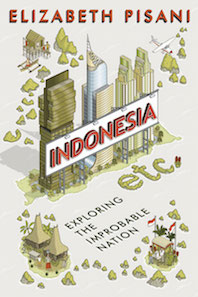
‘Indonesia Etc: Exploring the Improbable Nation’ by Elizabeth Pisani

This is a fascinating book about a year spent travelling around the Indonesian archipelago, written by a multilingual British woman who has spent much of her adult life in this diverse nation. She began her career as a journalist, then became an epidemiologist employed by the Indonesian Ministry of Health. In 2011, she decided to take time off to travel and learn more:

'Indonesia Etc' by Elizabeth Pisani“I only had one rule: ‘Just say yes’. Because Indonesians are among the most hospitable people on earth, this made for a lot of yesses. Tea with the Sultan? Lovely! Join a wedding procession? Yes please! Visit a leper colony? Of course! Sleep under a tree with a family of nomads? Why not? Dog for dinner? Uuuuh, sure. This policy took me to islands I had never heard of. I was welcomed into the homes of farmers and priests, policemen and fishermen, teachers, bus drivers, soldiers, nurses. I travelled mostly on boats and rickety-but-lurid buses that blared Indo-pop and had sick-bags swinging from the ceiling. Sometimes, though, I lucked into a chartered plane or rode cocooned in a leather car-seat behind tinted glass. I can count on one hand the number of times I was treated with anything other than kindness. I can also count on one hand the number of days that I did not have a conversation about corruption, incompetence, injustice and the slings and arrows of outrageous fortune.”

This is saved from being one of those ‘patronising white person blogging about their year of backpacking though a developing nation’ books by the author’s wide-ranging and first-hand knowledge of Indonesia. She displays genuine curiosity and warmth as she visits each community, but she’s also able to draw on her previous experiences. For example, there’s an excellent chapter on Aceh, the province that’s been wracked with separatist violence for decades. She provides a good summary of its complex post-colonial history, explaining why Aceh’s separatist movement is completely different to those in East Timor and West Papua, but she also relates anecdotes from working as a journalist in Aceh in the 1990s:

“At the time, it was impossible to tell who was behind the attacks. Only once, we saw a letter addressed to Indonesian newspaper editors, claiming responsibility for this wave of raids. Written entirely in lower-case, the letter was an eccentrically spelled mish-mash of anti-Javanese invective, childish threats, wounded pride and separatist rhetoric […] People called the troublemakers the GPK, just as the government did, and they had many theories about who they were. Most involved some combination of the following: disgruntled former soldiers who had been fired in a short-lived campaign against corruption in the military; thugs who wanted a bigger share of the marijuana trade (saus ganja was once a common ingredient in the cuisine of the region, and Aceh remained a centre of production for the crop); hot-blooded separatists back from training in Libya. It seemed wildly improbable to me that an organisation that didn’t have a shift key on its typewriter and couldn’t spell its own name would be linked to international terror training networks; it was only years later that I found that some of the fighters were indeed graduates from Middle Eastern training camps, though all the other theories also proved to be true.”

Much of the conflict in Indonesia that’s reported in the Australian media as being due to ‘the rise of Islam’ turns out to have a more complex, but also more prosaic, explanation. For example, the gangs of leather-jacketed, motorbike-riding thugs previously employed by politicians in Jakarta to attack student demonstrators have now

“begun to appear in turbans or knitted skullcaps, long white robes and straggly beards [to] selectively smash up those bars, nightclubs and brothels that don’t pay them protection money. A friend in the music business told me they demonstrated against Lady Gaga only after her promoters refused to pay them to provide security for her concert. But they do not choose their targets indiscriminately. They never vent their wrath on the porn industry, for example, because it is said to be controlled by the military.”

Most of the book, though, is not explicitly about politics but about the lives of ordinary Indonesians, trying to earn enough money to raise their families while dealing with a corrupt and incompetent bureaucracy, but also doing what people all over the world do – attending school, playing games, visiting friends, celebrating birthdays and weddings, and, even in the remotest islands, Facebooking on their mobile phones. It’s all related in a warm, entertaining style by an intrepid traveller. I think even readers who aren’t much interested in Indonesia will enjoy this book.

‘The Book That Made Me’, edited by Judith Ridge

Disclaimer: I’m acquainted with several of the people involved with the creation of this book. But I wouldn’t be writing about it here if I didn’t like it – I’d just pretend I hadn’t read it.

'The Book That Made Me' edited by Judith RidgeThe Book That Made Me is an interesting collection of personal stories by thirty-one authors and artists (mostly Australian, mostly writers for children and teenagers) about the books that “made them” – made them think, feel, laugh, made them want to create their own books. As with most anthologies, there’s a wide variety of pieces and I found some more compelling than others. Shaun Tan contributes a thoughtful essay about books that disturbed him, starting at the age of seven or eight with his mother reading him Animal Farm as a bedtime story, under the mistaken impression that it would be a charming fairytale (he decided it was “no more disturbing than stuff I witnessed at school each day”). His charming, whimsical illustrations can also be found throughout the book.

Other favourite pieces were those which had something in common with my own experiences. Simmone Howell writes about how she tried (and failed) to become a proper teenager using the wisdom contained in the Sweet Dreams and Sweet Valley High series. Catherine Johnson explains how she “never expected to see [herself] in a book … everyone back then knew only white people lived in books and had adventures”. Jaclyn Moriarty discovered, aged six, how her secret rage at the injustices of life had been transformed into a book called The Magic Finger. I also enjoyed Fiona Wood’s discussion of the helpful life lessons contained in Anne of Green Gables; Emily Maguire’s description of how Edith in Grand Days encouraged her to take risks and celebrate her teenage mistakes; and Julia Lawrinson’s entertaining account of her obsessive identification with Laura Ingalls Wilder. Most of these writers were already familiar to me, but I’d never heard of Catherine Johnson and now I feel a pressing need to read some of her children’s books, in which she says she “made sure to put children like me [that is, mixed-race kids] right in there, riding horses, wearing those amazing frocks, and mostly having adventures, just like everyone else.”

There was plenty of book nostalgia for me to wallow in (Dr Seuss! Little Women! Trixie Belden!) and I’ve added some recommended books to my To Read list, including Tom’s Midnight Garden by Phillipa Pearce, The House on Mango Street by Sandra Cisneros and Displaced Person by Lee Harding. This book contains potted biographies of all the contributors and I was pleased to see a thorough index. The Book That Made Me is published in Australia by Walker Books and will be published in North America this year by Candlewick Press, with all royalties going to the Indigenous Literacy Foundation.