The Years of Grace: Leisure

I meant to post this earlier, but have been experiencing major technological difficulties1. Sorry about that. Anyway, according to The Years of Grace, Fifties Girl had many different options when it came to her leisure hours. She could go to the pictures and sigh over Stewart Granger (although Virginia Graham cautions her to pay careful attention to the film’s production values, if only to be able to say, “Look how beautifully he acted, in spite of that appalling script”). She could listen to records on her gramophone (Christopher Stone recommends Elgar, Sibelius and Szymanowski, but warns her to “always test a new record in the shop before taking it home”). She could watch the ballet (Rumer Godden provides useful tips) or go to the theatre (in her best “party frock”) or listen to a concert (provided it featured “good music” by Beethoven or Mendelssohn, and not any of that terrible “jazz or light music”). Even reading was expected to be an exercise in self-improvement, with Howard Spring recommending that girls read “classics”:

“… it will sometimes happen, when you come to read them, that they seem a little difficult, their meaning is not on the surface, and you wonder why other people think them supreme. Now please have the grace to wait a little, to believe that you are not seeing them aright because your own vision is not yet clear. Go on reading them, and, as life itself teaches you what living means, the day will come when you will suddenly see what it is all about: the book will become an eye-opener, and you will cry with Job: ‘Now mine eye seeth Thee.'”

Fortunately, Noel Streatfeild provides some comfort to girls who like pulp fiction and jazz:

“Never care what any kind of art snob says or looks. If you like a book, like it and say so. If you like a certain sort of music, own up to it, don’t pretend you only enjoy something that actually bores you stiff.”

Mind you, even Noel is wary of some modern developments in popular culture:

“Wireless and television are scientific marvels, but like many other marvels they want careful handling. Television can be a joy, but, my goodness, it can be a horror. America, where of course all programmes over the air are paid for by manufacturers, nearly put me off television for good.”

Still, leisure isn’t just about watching others being creative. Kitty Barne has a great chapter on ‘Producing a Play’ and Cora Gordon almost inspired me to take up ‘Sketching’, with both writers providing lots of practical tips and emphasising how fun these activities can be. John Pudney also contributes an entertaining chapter on summer holidays, which can range from camping in the back garden and exploring old Roman roads in the local area, to boating on the Thames and drawing a map of your adventures (“There is a special mark, of course, for the spot where Father fell in”). However, he hopes he is not being unpatriotic when he declares that “holidays abroad with or without parents are the best holidays of all”. He gives examples of his own family trips to Ireland, featuring airsick passengers (“Half-way over the Irish Channel, Elizabeth, our youngest, said in a loud voice to the stewardess, who was bringing round lunch: ‘If that lady over there is too sick to eat her dinner, can I have hers too?'”) and in France, involving adventures with Customs officials (“Anne was so excited by it all, I remember, that she infuriated us by insisting that the nice man should examine her bags”).

Another illustration by Anna Zinkeisen from 'The Years of Grace'
One of these girls slouches, dresses in a slovenly manner and reads trashy books. The other learns tap dancing, so she has Poise.

And Marguerite Vacani (yes, the Miss Vacani who taught Princesses Elizabeth and Margaret – and Sophie FitzOsborne – how to dance) describes how enjoyable ballroom dancing can be:

“I have taught a baby of two a polka in the morning, and finished the day by teaching her grandparents the samba, and all three enjoyed themselves equally.”

Of course, dancing is not merely about enjoyment. It gives a girl “that most useful quality – poise” and furthermore, if a girl is “not naturally well made”, it will improve her shape. Also, dancing improves the complexion, eradicates shyness and gives one’s face “a contented look”. Tap dancing is especially good, because men love “the gayness and fascinating timing”. Well, if tap dancing can do all that, imagine how much good sport would do to Fifties Girl. Accordingly, the next section in The Years of Grace is Sport.

You might also be interested in reading:

1. The Years of Grace : You
2. The Years of Grace : Your Home
3. The Years of Grace : Leisure
4. The Years of Grace : Sport
5. The Years of Grace : Careers

_____

  1. Did Fifties Girl ever have to face a WordPress admin screen on which most of the buttons had suddenly decided to stop functioning for no apparent reason? No, I don’t believe she did. Readers, if you’ve tried to comment on this blog in the past two weeks, I’m very sorry, but your comment has been lost in the ether. However, commenting is back to normal now. I hope.

The Years of Grace: Your Home

In my previous discussion of the opening section of The Years of Grace, I neglected the fabulous illustrations, so I’ll make sure to include some here. Each section of this book has an introduction by Noel Streatfeild, and in this second section, ‘Your Home’, she admits that she was a “menace” as a teenager, “scowling round the house, saying ‘Why should I?’ about everything I was asked to do” and bringing home an unsuitably un-English friend called Consuelo (“Girls from Latin countries grow up faster than girls from cold countries. Consuelo probably held the record for fast growing-up even in a Latin country.”).

The first chapter, by Margaret Kennedy, discusses the difficulties of sharing a house with parents and siblings:

John Verney illustration from 'The Years of Grace'

“The mother must manage to make room for her daughter’s wider life without letting the others feel that the whole house now belongs to an ENORMOUS GIRL who seems to be everywhere at once – locked in the bathroom when her brother wants to shave, telephoning in the hall at the top of her voice, pressing a dress on the kitchen table and dancing to the radio in the sitting-room.”

(By the way, I thought that illustration’s dense cross-hatched style seemed familiar and it turned out to be the work of John Verney, author of Friday’s Tunnel.)

Margaret Kennedy provides some sensible advice about reaching compromises with parents, including the need to be nice to your parents’ dull old friends (“It is highly mortifying for a mother if the refreshments at her bridge party are brought in by a daughter who looks as though she were dispensing alms to a colony of lepers”) and having to explain your own friends to them (“Parents do not always understand their daughters’ friendships or see where the attraction lies”). This is further explored in an article by Richmal Crompton, who gives useful tips for being a good friend (you need tact, generosity, lack of possessiveness, common but not identical interests, and a shared sense of humour).

Next comes Magdalen King-Hall with a chapter about community service and social justice, even if she doesn’t call it that. Although the examples she provides are a little dated (Elizabeth Fry, William Wilberforce, Florence Nightingale), the message is still relevant today:

“We are linked together, not only with the other people in our own country, but with all the other people in the world. It is like a stone dropped into a pond, the ripples spread out in widening circles – you, your family, your school, your community, your country, your world. This feeling of world citizenship is only in its infancy, but it has been born, and two devastating world wars have not destroyed it.”

She even mentions The League of Nations. Veronica FitzOsborne would approve. But Veronica probably wouldn’t think much of Mary Dunn’s article, ‘The Queen Was in the Kitchen’. Mrs Dunn explains that men reserve their greatest admiration for a girl who can cook:

Anna Zinkeisen illustration from 'The Years of Grace'

“Pretty, helpless women are very nice in the fiancée stage, to take to the pictures and to dance with, but after marriage, unless a girl is feminine in the right way, not just to look at but a homemaker, there is going to be trouble. Of course, after he has married her a man still wants a girl to look pretty and to have time to do things with him, but he wants as well to be quite certain that she looks after him better than the wives of all the other chaps in the street, and that he can brag that he is the best-fed man he knows.”

Mrs Dunn despairs because British housewives are letting down the side, compared to their glamorous counterparts in France, Scandinavia and especially the United States. You might think those Hollywood films depicting pretty housewives creating beautiful meals in dazzling kitchens are just Hollywood fantasies. But you would be wrong:

“Most American kitchens are like that and nearly all American girls really are splendid cooks, and really do whisk up superb meals and appear five minutes later in their living rooms looking too glamorous to be true. This business of looking smart when doing housework or cooking is something that we in this country really ought to turn our attention to … I feel sorry for tradesmen; how depressing when they call, to be greeted by a bedraggled object …”

Fortunately, the next article, by Janet Farwell, involved a vet talking to a family about the advantages and disadvantages of various pets (dogs, cats, rabbits, tortoises, fish, hamsters, budgies, silkworms) and included some adorable puppy illustrations, so my blood pressure returned to normal.

Finally, Elizabeth Cadell gave a lot of practical advice on hosting teenage parties, including hints on venues (turn your bedroom into “a very attractive bed-sitting room” by scattering cushions on the floor and covering the dressing table with a tablecloth), refreshments (sausage rolls, trifle, ice-cream, cider cup and “in cold weather, provide Bovril”) and games (cards, Tiddlywinks, charades). Which leads nicely to the next section of The Years of Grace: Leisure.

You might also be interested in reading:

1. The Years of Grace : You
2. The Years of Grace : Your Home
3. The Years of Grace : Leisure
4. The Years of Grace : Sport
5. The Years of Grace : Careers

Adventures in Research: Schoolgirls in the 1950s and 1960s, Part Two

My copy of Truth, Dare or Promise: Girls Growing up in the Fifties was finally delivered and proved to be interesting, although not terribly useful for my research purposes and possibly not worth the three-month wait. I am far more excited by the arrival of this book:

'The Years of Grace', edited by Noel Streatfeild

The Years of Grace: A Book for Girls, edited by Noel Streatfeild, was recommended to me by Penni and is a marvellous guide to 1950s Girl Life. As the jacket proclaims,

The Years of Grace is a book for growing-up girls who are too old for children’s books and are just beginning to read adult literature. It is a difficult age – difficult for parents and friends, but more difficult for the girls themselves. What are they going to do when they leave school? How should they dress? What is a good hobby? How can they make the right sort of friends? The problems are endless, and here in The Years of Grace is to be found the wisdom of many of our greatest writers and most distinguished people of our time.”

There are sections on ‘You’, ‘Your Home’, ‘Leisure’, ‘Sport’ and ‘Careers’, all beautifully illustrated. I’ve only read the first section, but can already tell I’m going to find this book highly entertaining. The first chapter of ‘You’, for instance, is written by “a Woman Doctor” who has chosen the interesting pseudonym of ‘Cannula’. She begins by stating,

“When I become Prime Minister, I shall introduce a law: the study of glamour will become a compulsory subject for all girls at school. Science and algebra are all very well, but they will not be much use to you in life unless you also know all about glamour … I declare firmly that you will do much better if you have glamour without learning than if you have learning without glamour.”

The rest of her chapter consists of stern advice on posture (“no girl who holds herself badly can look really smart”) and grooming (make sure you change your knickers “two or three times a week at least” and use deodorant once a week).

This is followed by an amusing chapter by Marguerite Steen, mostly about the history of undergarments, although she does have some advice on modern-day underwear:

“Nothing on earth looks more sluttish than mended nylons (unless they are invisibly mended) with darns down the ladders. The ‘next worst’ is moth-eaten suspenders, a single glimpse of which is quite enough to ruin the effect of your handsomest hand-knitted sports stockings.”

Also, make sure you’re wearing nice underwear, in case you get run over by a bus:

“I remember being told by a friend of mine, who was in an accident, that the fact of having on her best pin-spot chiffon step-ins went quite a long way to offsetting the pain of her fractured thigh when they were taking her away in the ambulance!”

Then comes James Laver on the history of women’s hairstyles and Elizabeth Arden on ‘The Care of the Skin and Hair’ (strangely enough, this requires a lot of cleansing creams, skin tonics, foundation creams, face powders and outfit-coordinated lipsticks, all no doubt available at the nearest Elizabeth Arden counter). Digby Morton’s contribution is ‘Pretty Girls All in a Row’, full of words of wisdom on fashion (for instance, “school is a place where your reputation is built, a place to look trim and well-groomed always” and “the wisest thing a girl can do is to take a dress-making and millinery course”). He also wishes to be Prime Minister, so he could “make it compulsory for every girl to have a grey flannel suit”. (These writers seem to have a peculiar view of the role of the British Prime Minister.) But as much as I want to make fun of Digby Morton, I have to admit he provides some very good advice on colours, fabrics and styles, and a fifties girl who followed his advice on building a wardrobe would look quite fabulous. And Alison Settle’s ‘Making the Best of Yourself’ is a terrific, timeless article on teenage anxieties regarding emotions, making and keeping friends, falling in love, dealing with annoying siblings and managing parents. I am very much looking forward to the remaining sections of this book – if anyone’s interested, I’ll post my thoughts about them here.

You might also be interested in reading:

1. The Years of Grace : You
2. The Years of Grace : Your Home
3. The Years of Grace : Leisure
4. The Years of Grace : Sport
5. The Years of Grace : Careers

What I’ve Been Reading

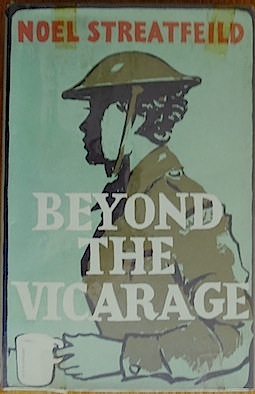
I’ve mostly been reading British fiction written during or about the 1960s, but as I tend to blog only about books I like, I won’t be writing about them.1 However, I did enjoy the third volume of Noel Streatfeild‘s autobiography, Beyond the Vicarage, first published in 1971. She wrote the books from the perspective of a character called ‘Victoria Strangeway’, explaining, “I made, and make, no pretence that I am not the Victoria in the three books, but the thin shield of anonymity has helped me to feel unselfconscious when writing the story of my life.” 'Beyond the Vicarage' by Noel StreatfeildFair enough, but it does lead to phrases like “Victoria seemed to think that …” and “Victoria must have forgotten that …”, which is a bit odd when she’s writing about herself. Anyway, this book is about how Victoria/Noel decides to stop being a successful actress touring the world and become a writer. She sails back from Australia via Siam (as it was then called), where her brother works, and eventually arrives in England to look after her recently-widowed mother. Although Victoria’s father had been a bishop from a well-off family, the family is now in ‘reduced circumstances’ and Victoria’s mother is the sort of helpless genteel lady who has never had to look after herself, so living in lodgings does not go well. After employing a series of disastrous companions, her mother is finally settled in her own new home with appropriate help and Victoria, breathing a huge sigh of relief, moves back to London to write her first novel. Despite the distractions of her busy social life (she eventually resorts to writing in bed in her pyjamas so she won’t be tempted to go out), she quickly writes the manuscript, immediately finds a publisher and is instantly making a comfortable living as a novelist. Her publisher even pays her a weekly wage when she complains the system of advances and royalties is too complex for her to deal with. The only complaint her publisher has is that “you make everyone too loveable. I doubt you could write about a bitch if you tried.” (Victoria then vows to write “the bitchiest bitch you ever read about” and writes It Pays To Be Good.) Then another publisher, aware of Victoria’s theatrical background, asks her to write a children’s book about child actors, so Victoria, “cross at herself for agreeing to something she was convinced she could not write”, produces Ballet Shoes, which is an instant bestseller, and the rest is history. Although she ended up writing a few more novels for adults, she gave up on them in the early 1960s, telling herself,

“If, for some reason, the public are either off novels or like such peculiar ones you couldn’t and wouldn’t write them, why go on trying? Let’s face it, you never had more than what Noel Coward’s song called ‘a talent to amuse’. You never belonged to the great. So give up writing [adult] novels here and now.”

She took great care with the research for her books – for example, she travelled with a circus when writing about child circus performers, visited Hollywood when writing about a child star, and spent “a lot of time in [Buckingham] Palace hanging about for news from the Lady-in-Waiting” when writing about Princess Margaret for Growing Up Gracefully. But the most interesting part of the book involves her experiences during the Second World War, when she joined the Women’s Voluntary Service. She ran mobile canteens in Blitz-battered London, arranged housing for bombed-out Londoners, put out fires set off by incendiary bombs and then, after the war, organised entertainment for newly-returned residents of the Channel Islands, gave lectures in Holland and spent her own money turning a London bombsite into a flower garden. (What a contrast with Dodie Smith, who spent the entire war living in luxury in America.) The war stories are a mixture of humour and heartbreak – a monkey rescued from the rubble of a bombed pub gratefully accepts a cup of hot milk, then turns around and bites his rescuer; a woman dying of cancer survives two bombing raids that kill the rest of her family. There is also personal anguish for Victoria, with her brother and his young family interned as prisoners of the Japanese, her own flat and most of her belongings destroyed in the Blitz, and her publisher’s warehouse, containing all unsold copies of her books, all the plates to reprint them and the entire first printing of her new book, getting “bombed to pieces”. While she skims over a lot of potentially interesting events and the book is essentially a series of unrelated anecdotes, Victoria/Noel comes across as a lovely person – energetic, funny, honest, devoted to helping others and endlessly curious about life.

'Quiet' by Susan CainTaking a break from post-war England, I then read Quiet: The Power of Introverts in a World That Can’t Stop Talking by US writer, Susan Cain. It came out a couple of years ago but there was a long queue for it at my library (I know, library patrons being deeply interested in a book about introverts, WHO WOULD HAVE THOUGHT IT). This was an easy-to-read, well-researched account of the difficulties introverts face in the extroverted culture of modern-day America. There was a clear overview of the strengths of both introverts and extroverts, as well as a good discussion of the overlap between ‘high sensitivity’ or reactivity (or neuroticism) and introversion. The author also explains that many introverts are very successful at faking extroversion when highly motivated to do so (for example, because their job requires it or they’re promoting a cause they’re passionate about), although they need ‘restorative niches’ of solitude to recharge their energy. Most of this information was familiar to me, although I was interested to read about research into introversion/extroversion in various animal species. For example, some species have about 20% ‘shy’ individuals and 80% ‘bold’ individuals, with the bold ones doing better in hard times because they’re willing to take the risk of being eaten in order to find food (the shy ones starve to death in harsh conditions, but thrive in good conditions as they’re better at evading predators). My only criticism of this book would be the very narrow focus – while the author (a Harvard-educated lawyer) claims the book is about American society in general, it’s really about rich white Americans and rich Asian-Americans (and all ‘Asians’, from Indians to the Japanese, are treated as having similar cultures and lifestyles, which is just not true). Still, it’s a good read and its bestseller status indicates there are a lot of Americans who agree that introverts are under-appreciated in their society. Also, I was interested to read the author’s note that “You wouldn’t be reading this book if I hadn’t convinced my publisher that I was enough of a pseudo-extrovert to promote it.” Sad, but true. Ah, for the good old days when authors were able to sit at home writing their books in introverted bliss, without having to worry about promoting themselves …

_____

  1. Although if you’re interested in finding out just how sexist, racist and homophobic 1960s England was, hey, have I got some book recommendations for you!

Nancy Pearl Discusses ‘A Brief History of Montmaray’

A Brief History of MontmarayNancy Pearl talked about A Brief History of Montmaray this week in her regular book spot on KUOW-FM, a Seattle radio station. I am very chuffed about this – not only to hear someone on the other side of the world recommending my book, but also because this was NANCY PEARL. The most famous librarian in the world! Probably the only librarian to have her own action figure1 and trading cards and to have a tribute bluegrass band named in her honour!

The interview with Marcie Sillman includes some discussion about what distinguishes Young Adult fiction from adult fiction (“Marketing,” Nancy Pearl astutely observes) and the role of history in historical fiction. You can listen to more book recommendations at the KUOW website. Thank you, Nancy Pearl. Thank you, KUOW. And thank you, book people of Seattle.

_____

  1. The company responsible for the Nancy Pearl librarian action figure (with push-button finger-to-lips shushing action) also sells Edgar Allan Poe lunchboxes, Jane Austen tattoos and “Shakespearean Insult Bandages”. Just in case you’re interested.