Five Favourite Picture Books

I don’t read many children’s picture books these days, but I’ve just come across two excellent ones, which reminded me of some old favourites. Note: I realise lots of children’s picture books are designed to teach Important Moral Lessons, but when I read a picture book, I mostly want it to make me laugh. All of these books deliver on that front.

1. This Is Not My Hat by Jon Klassen
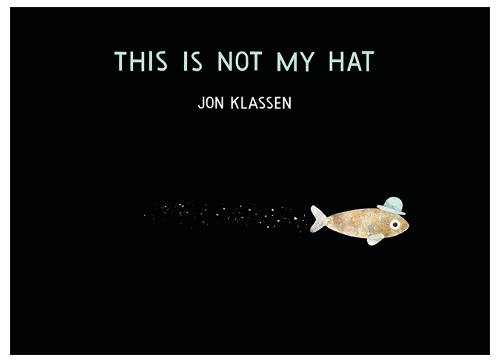
'This Is Not My Hat' by Jon Klassen

“A fish has stolen a hat. And he’ll probably get away with it. Probably.”

This is a clever and very funny story about a little fish who steals a hat from a big fish. The little fish is not worried about his crime, because even if the big fish “does notice that it’s gone, he probably won’t know it was me who took it. And even if he does guess it was me, he won’t know where I am going.” Unfortunately, it turns out there’s a witness to the crime. But he won’t tell, will he?

The illustrations are fabulous, featuring simple, flat figures that manage to convey a vast amount of information through tiny changes in shape. I loved the single, visible eye of the big fish, which progressively showed the fish asleep, awake, alert to his missing hat, angry, and very, very determined to get his hat back. And the text was perfect, juxtaposing the little fish’s blithe narration (“So I am not worried about that”) with images of his impending doom (a little crab with scared, googly eyes points frantically with his claw as the big fish bears down on them). Bonus points for this book because the text is printed in a clear, easy-to-read black font of uniform size on an off-white background. (My pet peeve regarding children’s picture books is when the illustrator uses a barely-readable font that meanders all over the page, changes size constantly and blends in with the background colours, all for no apparent reason other than to make the book seem Wacky and Zany. Illustrators – it just makes it really hard for new readers to figure out the words. So stop doing it.) Oh, and I guess this book does have an Important Moral Lesson, too: Don’t steal hats from big fish.

2. Mr Chicken Goes To Paris by Leigh Hobbs
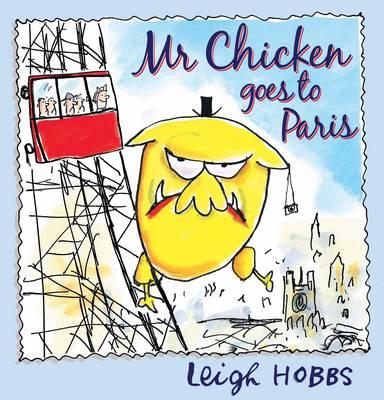
'Mr Chicken Goes To Paris' by Leigh Hobbs

“The world’s most beautiful city meets the world’s most startling chicken . . .”

Mr Chicken, a four-metre-tall, bright yellow chicken, visits his friend Yvette in Paris. It is a very eventful trip. He rides the Métro, drops in at the Musée du Louvre (where the tourists decide he’s far more interesting than the Mona Lisa), climbs the outside of the Eiffel Tower (“Mr Chicken was far too excited to wait for the lift”), plays in the bell tower of Notre Dame, does lots of shopping, and decides to go on a diet after looking at his “great big bottom” in the Hall of Mirrors at Versailles. This does not stop him eating “everything on the menu” at dinner, which causes some problems when he tries to squeeze onto the plane at the end of his trip. But luckily, his clever young friend Yvette has a solution . . .

Bonus points for teaching me some French phrases (for example, Monsieur Poulet va à Paris). Magnifique!

3. What Faust Saw by Matt Ottley

'What Faust Saw' by Matt Ottley

“One night, Faust woke up, looked out the window and saw something very strange . . .”

Faust is a big brown dog who just happens to be the only witness when a horde of drooling, multicoloured aliens invades his suburb. Faust wakes up his family to inform them, but they don’t believe him. It is all very unfair. Faust decides to run away (“Then they’d be sorry”), but the aliens follow him and worse, someone hears him barking at them. Oh no, it’s the dog catcher!

This book loses some points for having hard-to-read text that meanders all over the page, but the richly coloured, beautifully detailed oil paintings make up for it. This book was very popular with my young students (as long as I read the words aloud to them), because they loved the aliens, especially the big, dinosaur-like one with the disgusting string of snot hanging from one nostril.

4. Counting on Frank by Rod Clement

'Counting On Frank' by Rod Clement

This book is about a boy who likes counting. No, he really, really likes counting. He especially likes calculating and estimating – for example, figuring out how long it would take the entire house to fill with water if he leaves the bath taps on and the plug in the bath, or how many humpback whales would fit inside his house, or how long his arms will grow if he has to keep dragging tins of dog food home from the shops for his dog, Frank. The (unnamed) boy’s counting is driving his parents mad – until they encounter a situation where his talent really comes in handy.

This has great illustrations of the bizarrely logical world of the boy’s imagination. This will appeal to children who like maths or have their own obsessive behaviours, especially when they see the boy’s (and Frank’s) moment of triumph at the end.

5. Traction Man Is Here by Mini Grey

'Traction Man Is Here' by Mini Grey

“An exciting adventure about a boy and his superhero can-do toy.”

A brand-new Traction Man arrives for Christmas (complete with “dazzle-painted battle pants”, jungle camouflage, sub aqua suit and space gear). He’s soon embroiled in daring adventures, including battling deep-sea monsters (aka a dishcloth in the sink), photographing the legendary Mysterious Toes (in the bathtub), rescuing dollies from the Wicked Professor Spade, and also acquiring a sidekick, Scrubbing Brush. But after taking the InterGalactic People Mover to Granny’s house, Traction Man faces his toughest assignment yet – getting rid of the “knitted green romper suit and matching bonnet” that Granny’s made him for Christmas.

This is a hilarious celebration of children’s imaginative play, with a few sly jokes for grown-ups hidden in the detailed, brightly coloured illustrations. Super good!

Favourite Books And TV, Plus A Book Giveaway

The Book Smugglers kindly invited me to write a guest post about my favourite books and TV of 2012. My chosen favourites won’t come as any surprise to regular readers of this blog, but you can read my post here. The Book Smugglers are also giving away a copy of the Vintage Classics edition of A Brief History of Montmaray, with entries closing on January 13, 2013.

My Favourite Books of 2012

Here are the books I read this year that I loved the most.

But first, some statistics!

I read 72 books this year, plus approximately 7,853 articles in scientific journals (this last number may be a slight exaggeration). I’m sure you really, really want to see some pie charts about the books I read, so here you go:

Books I read in 2012 by genre

I read lots more children’s books this year than I usually do.

Books I read in 2012 by writers' nationality

Hmm, that is not very diverse, is it? I only read three books that had been translated into English, too.

Books I read in 2012 by writers' gender

That’s probably typical of my reading habits. It’s not that I deliberately try to read more women writers than men, it simply works out that way most years.

Now for my favourites.

My favourite children’s books

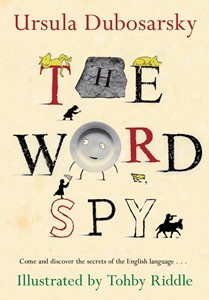
'The Word Spy' by Ursula Dubosarsky and Tohby RiddleI absolutely loved Saffy’s Angel by Hilary McKay, which I have previously written about here. I also liked Amelia Dee and the Peacock Lamp by Odo Hirsch, a sweet, charming story about a girl who is inspired to write stories by a mysterious brass lamp she finds in her house. This has many of the usual elements of an Odo Hirsch book (eccentric but benevolent parents, a carefully multicultural cast of characters, a vaguely European setting), but I found Amelia especially endearing and the lessons she learned (that it takes courage to share your thoughts with others; that other people often have complex motivations for their actions; that unchecked anger harms yourself, not just others) were exactly what I needed to think about at the time.
Other books I enjoyed included The Word Spy, an entertaining non-fiction book about the history of the English language, written by Ursula Dubosarsky and illustrated by Tohby Riddle, and Al Capone Shines My Shoes by Gennifer Choldenko, about a boy whose father is a guard at Alcatraz Prison in 1935.

My favourite Young Adult novel

This year I read quite a few YA books that had received plenty of acclaim, but I ended up feeling underwhelmed by a lot of them. I could certainly understand why the books had been praised, but they just weren’t my cup of tea. Sometimes they had beautiful sentence-level writing, but the voice seemed implausible for the teenager who was supposed to be narrating the story. Sometimes they had a great narrator and fascinating premise, but the structure of the novel didn’t work for me. One book I’d seen described as ‘feminist’ was . . . really, really not feminist at all. Maybe my expectations had been raised too high by the hype. Anyway, my favourite YA book of 2012 turned out to be a book first published in 1910, long before the concept of ‘Young Adult literature’ existed. The book was The Getting of Wisdom, by Henry Handel Richardson, which I’ve previously written about here.

My favourite novels for adults

'At Last' by Edward St AubynI found At Last by Edward St Aubyn quite as harrowing as I’d expected, but also hopeful and consoling and unexpectedly funny. It’s the fifth in a series of novels about Patrick Melrose, who was born into a wealthy, aristocratic family and was then subjected to appalling childhood abuse and neglect by his parents. In this book, Patrick has finally overcome his drug and alcohol addictions and is trying to cope with his marriage breakdown, when his mother dies. The novel is elegantly structured around her funeral, allowing a lot of thoughtful commentary on the nature of death, forgiveness and free will, but also some hilarious descriptions of the idle rich. Patrick’s awful relatives and family friends are mostly ‘old money’ who’ve never worked a day in their lives, but complain constantly about how difficult their existence is. I know this all sounds very grim and this book certainly isn’t for everyone, but I thought it was fascinating and beautifully written.

I also enjoyed Insignificant Others by Stephen McCauley and The Beginner’s Goodbye by Anne Tyler, which I’ve previously written about here. I’m currently halfway through Restoration by Rose Tremain and loving it, so I suspect this book will make it onto my 2012 favourites list, too.

My favourite non-fiction for adults

I read some terrific biographies this year, including A. A. Milne: His Life by Ann Thwaite and Rosalind Franklin: The Dark Lady of DNA by Brenda Maddox. I wrote about both books here. I also enjoyed Alex and Me, by Irene M. Pepperberg, about a very smart parrot.

I will not bore you with my To Read list for 2013, especially as it contains approximately 2,147 scientific articles1 that I didn’t get around to reading this year (this number may be a slight exaggeration).

Hope you all have a happy and peaceful holiday season, and that 2013 brings you lots of great reading.

More favourite books:

1. Favourite Books of 2010
2. Favourite Books of 2011

_____

  1. Yes, it’s research for my next book. The book that was supposed to need far less research than my last book. Ha ha ha.

Montmorency

Having devoted an entire blog post to a cat, it’s only fair that I give dogs their turn during Animal Month here at Memoranda. I couldn’t think of any dog poems that I loved, but here are some excerpts about one of my favourite fictional dogs, Montmorency from Three Men in a Boat (To Say Nothing of the Dog).

“To look at Montmorency you would imagine that he was an angel sent upon the earth, for some reason withheld from mankind, in the shape of a small fox-terrier. There is a sort of Oh-what-a-wicked-world-this-is-and-how-I-wish-I-could-do-something-to-make-it-better-and-nobler expression about Montmorency that has been known to bring the tears into the eyes of pious old ladies and gentlemen.

When first he came to live at my expense, I never thought I should be able to get him to stop long. I used to sit down and look at him, as he sat on the rug and looked up at me, and think: ‘Oh, that dog will never live. He will be snatched up to the bright skies in a chariot, that is what will happen to him.’

But, when I had paid for about a dozen chickens that he had killed; and had dragged him, growling and kicking, by the scruff of his neck, out of a hundred and fourteen street fights; and had had a dead cat brought round for my inspection by an irate female, who called me a murderer; and had been summoned by the man next door but one for having a ferocious dog at large, that had kept him pinned up in his own tool-shed, afraid to venture his nose outside the door for over two hours on a cold night; and had learned that the gardener, unknown to myself, had won thirty shillings by backing him to kill rats against time, then I began to think that maybe they’d let him remain on earth for a bit longer, after all.”

Montmorency

When we first meet Montmorency, he is helping Jerome, Harris and George pack for their boating holiday, although the three men don’t always appreciate the dog’s assistance:

“Montmorency’s ambition in life is to get in the way and be sworn at. If he can squirm in anywhere where he particularly is not wanted, and be a perfect nuisance, and make people mad, and have things thrown at his head, then he feels his day has not been wasted.

To get somebody to stumble over him, and curse him steadily for an hour, is his highest aim and object; and, when he has succeeded in accomplishing this, his conceit becomes quite unbearable.

He came and sat down on things, just when they were wanted to be packed; and he laboured under the fixed belief that, whenever Harris or George reached out their hand for anything, it was his cold, damp nose that they wanted. He put his leg into the jam, and he worried the teaspoons, and he pretended that the lemons were rats, and got into the hamper and killed three of them before Harris could land him with the frying-pan.

Harris said I encouraged him. I didn’t encourage him. A dog like that don’t want any encouragement. It’s the natural, original sin that is born in him that makes him do things like that.”

Montmorency has quite a few adventures during their holiday, including an encounter with a tomcat:

“I like cats; Montmorency does not.

When I meet a cat, I say, ‘Poor Pussy!’ and stop down and tickle the side of its head; and the cat sticks up its tail in a rigid, cast-iron manner, arches its back, and wipes its nose up against my trousers; and all is gentleness and peace. When Montmorency meets a cat, the whole street knows about it; and there is enough bad language wasted in ten seconds to last an ordinarily respectable man all his life, with care.”

Montmorency in a fightHowever, Montmorency has met his match with this particular Tom (“there was something about the look of that cat that might have chilled the heart of the boldest dog”). Montmorency also comes off the worst in an encounter with a kettle, but this doesn’t stop him helping with the cooking – for example, when the men decide to make an Irish stew:

“Montmorency, who had evinced great interest in the proceedings throughout, strolled away with an earnest and thoughtful air, reappearing, a few minutes afterwards, with a dead water-rat in his mouth, which he evidently wished to present as his contribution to the dinner; whether in a sarcastic spirit, or with a genuine desire to assist, I cannot say.”

Montmorency may have begun the book by advising the men not to embark on their trip (“He never did care for the river, did Montmorency”), but he valiantly supports them throughout their travails, so it’s only fitting that he has the last word:

“‘Well,’ said Harris, reaching his hand out for his glass, ‘we have had a pleasant trip, and my hearty thanks for it to old Father Thames—but I think we did well to chuck it when we did. Here’s to Three Men well out of a Boat!’

And Montmorency, standing on his hind legs, before the window, peering out into the night, gave a short bark of decided concurrence with the toast.”

Montmorency gets wet

My Favourite Novels About Britain At War

1. Small Island by Andrea Levy'Small Island' by Andrea Levy

Jamaican airmen stationed in England during the Second World War find that the ‘Mother Country’ is less welcoming than they’d expected.

2. The Charioteer by Mary Renault

A soldier wounded at Dunkirk and recovering in an English hospital falls in love with a conscientious objector working as a hospital wardsman.

3. Marking Time and Confusion from the Cazalet Chronicles by Elizabeth Jane Howard

The Cazalet family’s privileged lives are changed forever when England goes to war.

'Westwood' by Stella Gibbons4. Westwood by Stella Gibbons

Plain, bookish Margaret and her beautiful friend Hilda are drawn into the orbit of a pompous playwright in Blitz-battered London – but who is exploiting whom?

5. The Night Watch by Sarah Waters

Four Londoners – all on the outskirts of society because they’ve fallen in love with the wrong people, all terribly damaged by the war – have their interlinking stories gradually revealed in a clever narrative that travels backwards through the 1940s.