
I did the illustrations for my new book myself, mostly because I was on a limited budget and couldn’t afford to pay illustrator fees. These illustrations definitely don’t look like the work of a professional, which is okay because they’re supposed to have been done by the thirteen-year-old narrator. But as I was working on my less-than-perfect illustrations, I remembered how much I used to enjoy drawing when I was a teenager. I did art as an elective subject at high school and proved to be spectacularly untalented at most artistic endeavours – painting, sculpture, pottery, screen printing – although I was okay at drawing. Maybe the idea of perspectives and vanishing points and so on appealed to my nerdy maths brain. Anyway, I had so much fun doing my recent book drawings that I decided I wanted to do a bit more guided practice and eventually found this book by Mark Kistler, who apparently is famous in the US and used to be on TV.
This book was a great introduction to basic drawing techniques. It’s designed for absolute beginners with no confidence in their own abilities, so it was ideal for me, given I’d barely picked up a pencil in thirty years. There are thirty lessons, which you could do in thirty days, although I didn’t have time to spare every day for a month and so I stretched the lessons out over three months. The lessons teach the fundamental ‘laws’ (foreshortening, placement, overlapping, shadow and so on) that make pencil marks on a page look like three-dimensional objects, but it’s done in a simple, easy-to-follow manner that provides quick success and builds confidence.
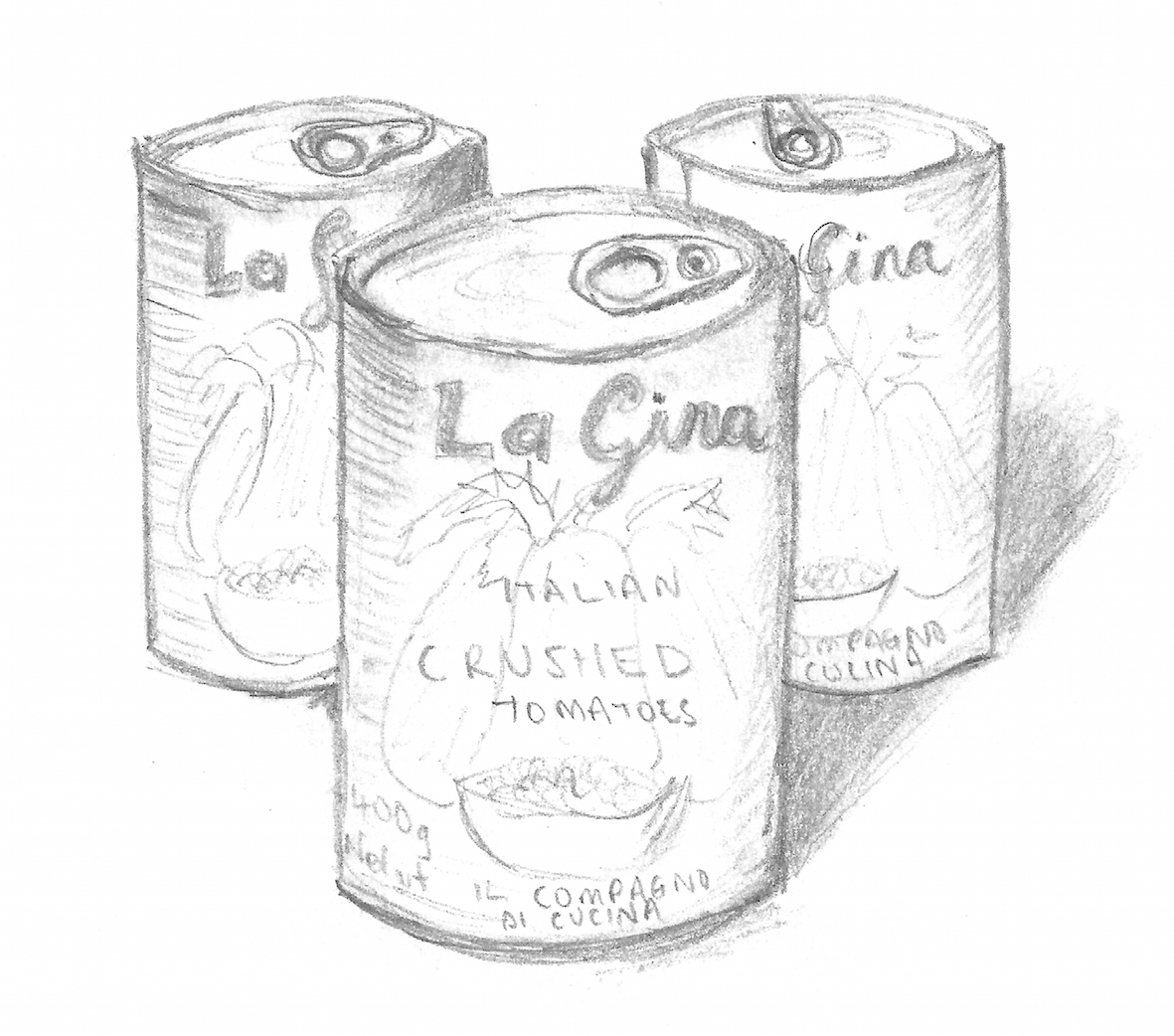
I zoomed through the early lessons on spheres, cubes, spheres inside hollow cubes, pyramids and textures, coming unstuck only when I hit cylinders. Something about the combination of curved and straight lines did my head in. But the book gives lots of practice in each skill, over multiple lessons, and so I persisted, valiantly producing wonky tins of tomatoes:
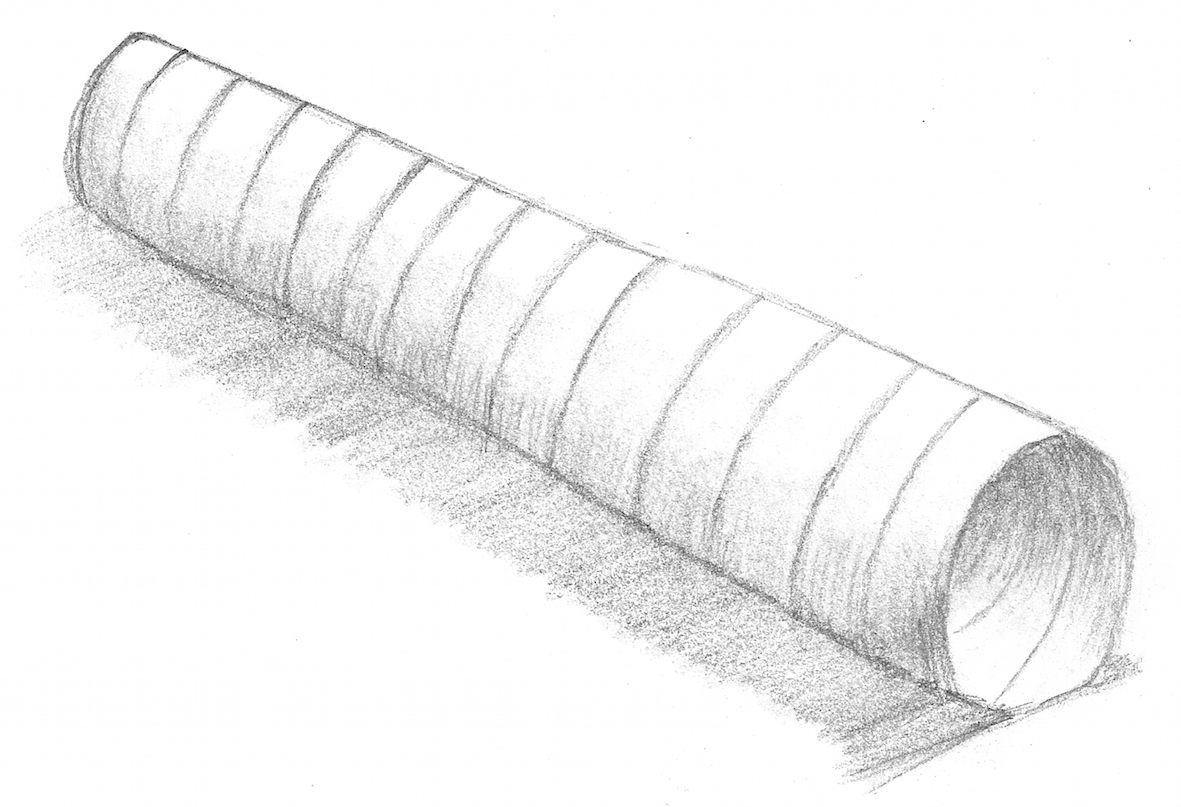
And wonky tubes:
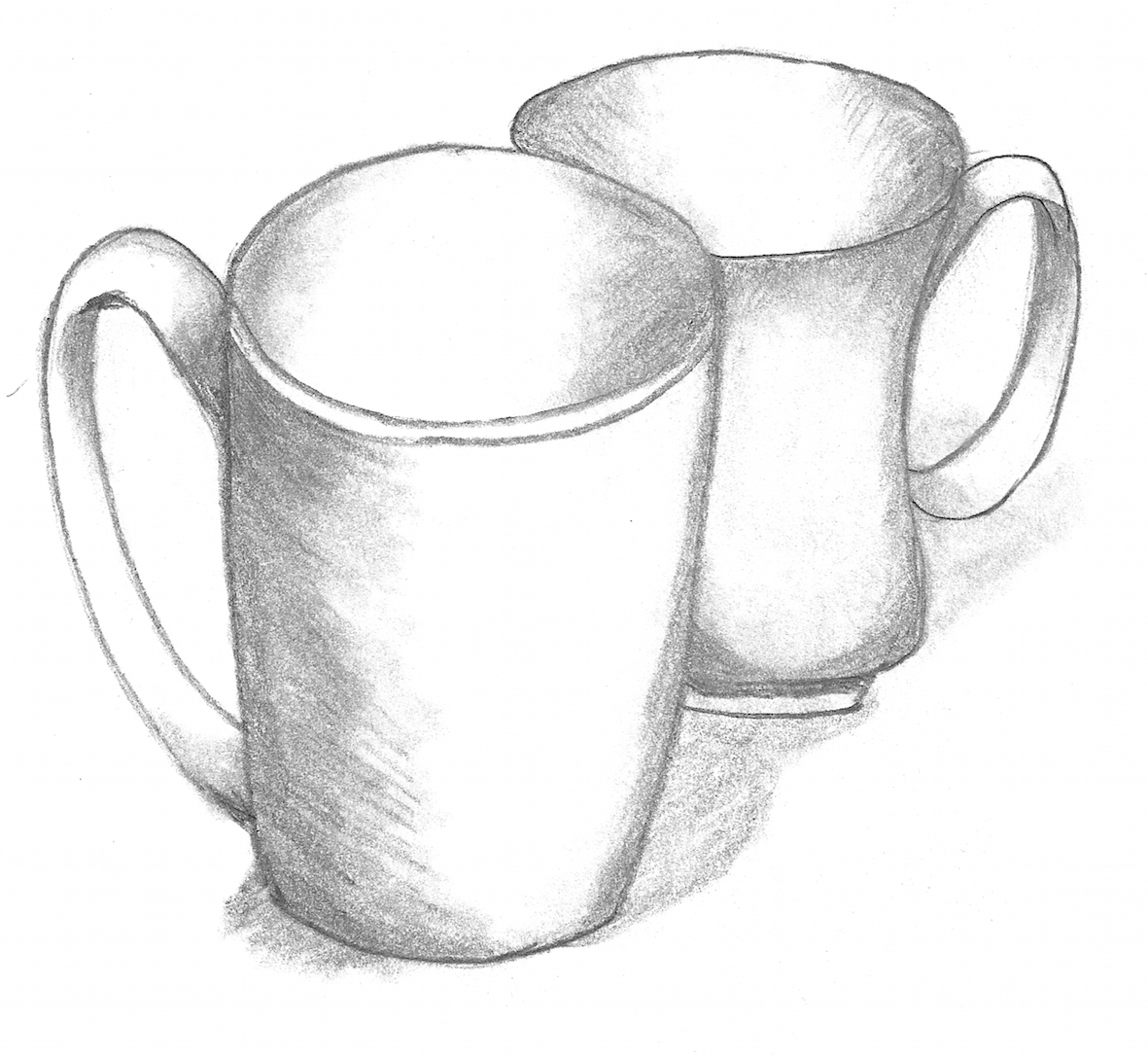
And wonky mugs with wonky handles:
Then came interiors and exteriors of buildings in one-point and two-point perspective. Phew, mostly straight lines again, what a relief:

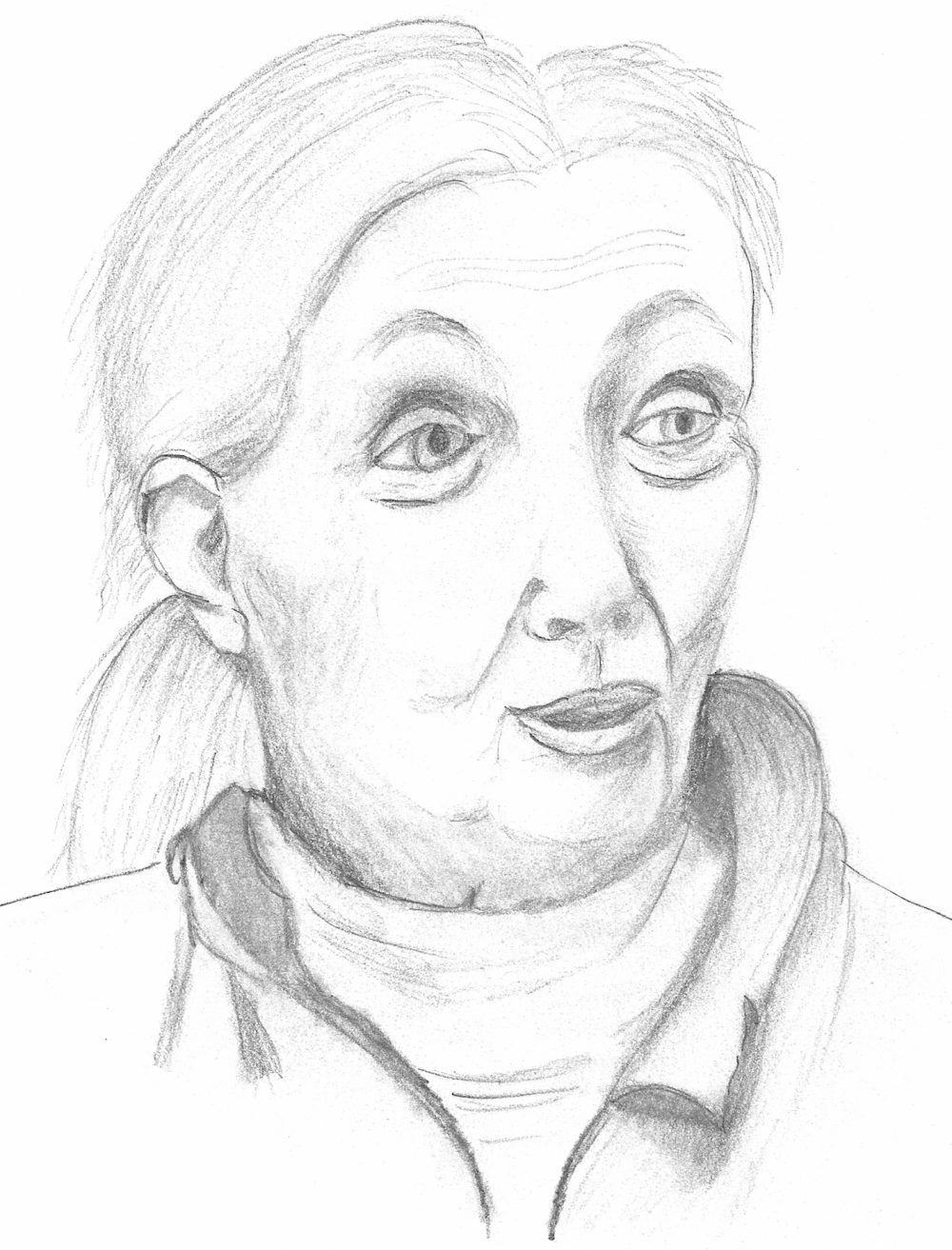
Mark Kistler is a cartoon illustrator, so he also provides instruction in some basic cartooning skills, such as 3D lettering and cartoon whooshes and cartoon planets consisting of volcano craters and levitating boulders. Then in Lesson 28, we suddenly had to draw faces. This seemed an enormous leap to me, but once I started, I realised I was using the same principles and skills I’d been practising all along. Admittedly, my first face was only vaguely face-like, but I kept going for a few days and my face drawings got better and better:


The final lesson, though, was to draw your own hand. You know what fingers are? CYLINDERS! It’s also pretty difficult using your right hand to hold the pencil while you draw your own left hand. I am definitely in need of more hand-drawing practice, ideally using someone else’s hand as a model.
The good thing about drawing is that you don’t need anything except a pencil and some paper. Kistler provides suggestions for a few other useful drawing tools, but they weren’t expensive. I ended up spending less than twenty dollars in total on a nice thick sketch book, a smudging tool, some pencils and a nifty retractable eraser. Kistler is also a fan of tracing as an instructional method and he recommends a complicated arrangement involving a transparent clipboard, erasable markers and an easel. I couldn’t be bothered with that and honestly didn’t think tracing was going to help me develop my skills, so I ignored all the tracing instructions. The lessons also have optional ‘bonus challenges’ to extend your skills – sometimes I did them, sometimes I didn’t, depending on how enjoyable or interesting they looked. But by the end of the book’s lessons, I definitely felt more skilled and confident about drawing. I found I really enjoyed relaxing over a sketching activity for twenty minutes at the end of a long, stressful day and I plan to keep on drawing. If you want to learn to draw, but lack confidence and don’t want to shell out for expensive drawing lessons, You Can Draw in 30 Days is highly recommended. Two smudgy thumbs up!

 So begins this highly entertaining memoir about a rich and eccentric Sydney family in the 1920s and 1930s. The author’s many older relatives tend to die in unusual ways: Aunt Juliet’s husband was killed when he fell through the dining room floor and broke his neck; Uncle Spot fell off a ladder while attempting to change a light bulb; Uncle Luke tumbled backwards off his office chair; Aunt Eva ate too many green apples; Aunt Jan died “from blowing up a balloon”. Even a visiting plumber dies of a heart attack after catching sight of the author’s ravishing mother, who’d “emerged naked from her dressing room en route to take a bath”.
 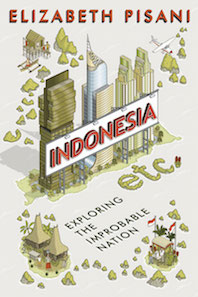 “I only had one rule: ‘Just say yes’. Because Indonesians are among the most hospitable people on earth, this made for a lot of yesses. Tea with the Sultan? Lovely! Join a wedding procession? Yes please! Visit a leper colony? Of course! Sleep under a tree with a family of nomads? Why not? Dog for dinner? Uuuuh, sure. This policy took me to islands I had never heard of. I was welcomed into the homes of farmers and priests, policemen and fishermen, teachers, bus drivers, soldiers, nurses. I travelled mostly on boats and rickety-but-lurid buses that blared Indo-pop and had sick-bags swinging from the ceiling. Sometimes, though, I lucked into a chartered plane or rode cocooned in a leather car-seat behind tinted glass. I can count on one hand the number of times I was treated with anything other than kindness. I can also count on one hand the number of days that I did not have a conversation about corruption, incompetence, injustice and the slings and arrows of outrageous fortune.”

