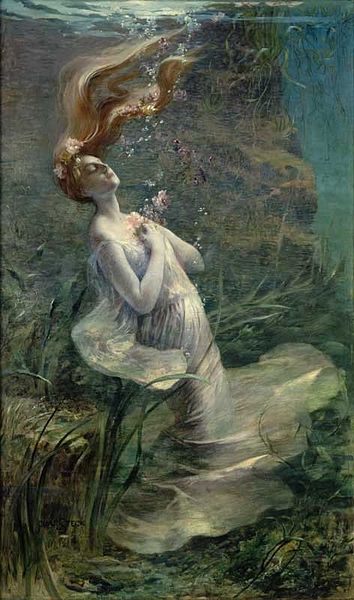
I’ve been meaning to write a blog post on this topic ever since The FitzOsbornes in Exile was first published in North America (that is, two years ago, which says something about my blogging habits). I don’t want to give away any plot spoilers to those who haven’t read the book, but let’s just say that it’s set in the late 1930s, in England, and that at least one male character is gay1. A surprising number of readers seemed to assume that any well-brought-up young lady of this time and place would have been shocked, horrified and outraged at the very idea of homosexuality, and that all gay men were shunned by Society and were in constant danger of being carted off to prison, à la Oscar Wilde. So, there were a number of comments from readers about how ‘implausible’ it was that Sophie and Veronica, the two young ladies at the centre of the story, would be so accepting of their gay male relative.
Now, it’s true that any kind of sexual activity between men was illegal in England between 1885 and 19672, but it’s also true that these laws were applied very selectively. In general, rich, aristocratic men were free to do whatever they liked. Yes, Oscar Wilde was convicted of “gross indecency”, but that was an unusual case because he started the whole thing off (by bringing a libel action against his boyfriend’s belligerent father, when what the father was saying about Wilde was mostly true). Anyway, that case was in 1895, forty-two years before the events of The FitzOsbornes in Exile. Consider current attitudes to gay issues, and compare this to how most people thought in the early 1970s, and you’ll see that things can change significantly in forty-two years. The fact is that in the 1930s and 1940s, there were quite a lot of popular, important and influential same-sex-attracted men who were part of English Society. Here are some of them.
First, the obvious ones. In the world of theatre and music, the most famous were probably Ivor Novello, Noël Coward and Benjamin Britten. There was also stage designer Oliver Messel, who was closely associated with the British royals and designed Princess Margaret’s Caribbean house. Norman Hartnell and Hardy Amies held Royal Warrants to design frocks for various British royals (Hardy Amies also happened to be a Special Operations Executive agent who worked with the Belgian resistance during the war), while the crème de la crème of Society queued up to be photographed by Cecil Beaton.

Meanwhile, the Bloomsbury set was not, strictly speaking, part of respectable Society, but it was influential and included writer Lytton Strachey, economist John Maynard Keynes and artist Duncan Grant.
Those with connections to Oxford included Maurice Bowra (Warden of Wadham College, later Vice-Chancellor of the university and awarded a knighthood), Brian Howard (poet, journalist, supposedly an inspiration for the character of Anthony Blanche in Brideshead Revisited) and Harold Acton (writer, also supposedly a model for Anthony Blanche). Other famous same-sex-attracted male writers were Siegfried Sassoon, Raymond Mortimer and E.M. Forster.
Then there were a whole lot of aristocrats who didn’t do much, but were certainly accepted in Society, starting with Prince George (brother of King Edward VIII and King George VI), whose male lovers were rumoured to have included his cousin Louis Ferdinand, Prince of Prussia, Noël Coward and Anthony Blunt (art historian, cousin to the Queen, Communist spy). There was also Stephen Tennant, who “spent most of his life in bed” and supposedly inspired the character of Cedric in Love In A Cold Climate. However, I think my favourite aristocrat would have to be Gavin Henderson, 2nd Baron Faringdon: “Described by David Cargill as a ‘roaring pansy’, Henderson was known for his effeminate demeanour, once opening a speech in the House of Lords with the words ‘My dears’ instead of ‘My Lords.'”
What is more interesting to me is the number of gay men in positions of real political power, either in the House of Commons or the diplomatic services. For example, Oliver Baldwin, son of Prime Minister Stanley Baldwin, had a long career in politics, first as a Labour MP, then as Parliamentary Secretary to the Secretary for War. When he was appointed Governor of the Leeward Islands, a British colony in the Caribbean, he took his partner, John Boyle, with him. Other politicians included Henry ‘Chips’ Channon, Harold Nicolson, Tom Driberg and Robert Boothby. It’s true that these men did not always receive unconditional positive regard from their family and colleagues. For example, Oliver Baldwin never became a government minister, despite his experience and political connections. He was also recalled from the position of Governor after three years (although this was more because he supported socialism and anti-colonial attitudes in the islands than because the white colonials were scandalised by his relationship with John Boyle – and Oliver’s parents did eventually come to accept his partner as almost a son-in-law).
Some of these men had long, happy, unconventional marriages with women (for example, Harold Nicolson’s marriage to Vita Sackville-West); some entered into brief or unhappy marriages in an attempt to placate their families and produce an heir; others were ‘confirmed bachelors’. Some of them were definitely gay, others were probably bisexual, and very few of them were ‘out’ in the public sense that we mean now. But all of these men participated in Society, and other people in Society knew about them and accepted them to varying degrees – which isn’t so different from the way things are now.
So I think Sophie and Veronica’s attitudes in The FitzOsbornes in Exile are entirely plausible – especially as neither of them is particularly religious, and Veronica makes a habit of rebelling against conservative values. And I also think Veronica would have loved a chance to debate Marxism with Oliver Baldwin.
_____
- Yes, I know they probably wouldn’t have used the word ‘gay’ in 1937, but the vast array of words used for male homosexuality in the twentieth century would take up an entire blog post of their own. For those who are interested, A Dictionary of Euphemisms, by Judith S. Neaman and Carole G. Silver, has a good discussion of North American, British and Australian terms. ↩
- Lesbians did not exist, according to the law. ↩