How To Write A Historical Novel In Seven Easy Steps – Step Four

First published on the Centre for Youth Literature website, Inside A Dog, in 2012.

4. Write Lots of Words

In the case of The FitzOsbornes at War, I had to write about 136,000 words. Luckily, I didn’t know how ridiculously long the story was going to be when I started typing, otherwise I’d have been too intimidated even to begin the book. As it was, I simply sat down at my computer every day, looked at my stack of index cards and told myself, ‘Okay. Today, I’ll try to get through two cards.’ Then, after I incorporated each bit of information from an index card into my story, I’d put a tick next to the information on the card (as you can see in yesterday’s index card photo). It was very satisfying to end a day with a couple of ticks, but that didn’t happen very often. Sometimes it would take me weeks to get through a single card. Sometimes I’d decide that a particular fascinating fact was never going to fit comfortably into my story, no matter what I did. Regardless, I plodded on.

I wrote the book in its correct order, from the first chapter to the last, so I wouldn’t get confused. This also helped motivate me (‘Okay, today I have to write that boring yet necessary bit about Churchill, but as soon as that’s done, I get to write that funny story about Henry!’). Yes, writers are weird.

After about a year and a half, I had a whole lot of words printed on paper:

Manuscript of Fitzosbornes at War

Don’t even ask how many pages that is. TOO MANY. That’s why it needed to be edited.

Next: Editing

How To Write A Historical Novel In Seven Easy Steps – Step Three

First published on the Centre for Youth Literature website, Inside A Dog, in 2012.

3. Get Organised

As I researched, I took notes and I filed all my bits of paper in a big folder:

Research notes in a folder

How did writers function before Post-It notes were invented? I used Post-Its as bookmarks, to label sections of my notes and to jot down bits of information that might come in handy later. As I was reading, I was constantly on the lookout for interesting trivia, funny anecdotes, outrageous people – anything that I could fit into my own story.

After about six months, my notes had outgrown my folder and my brain was about to explode with all my ideas, which meant it was time to move onto my index cards:

Pile of index cards, grouped in sections with coloured rubber bands

For The FitzOsbornes at War, I ended up with about two hundred palm-sized cards, each one containing notes about an important event of the war and/or a significant event for one of my characters. Each card also had a date at the top, and a number that showed where the card fitted into the storyline, as well as page references for my sources of information. For example, here’s card number 6:

Index card with handwritten notes

If you can’t read my writing (and I don’t blame you if you can’t – even I have trouble reading it sometimes), it says, “mid Sept 1939 – S + V in London, farewell party for Kennedy children (Rosemary + Mr K stay in London) p. 67 Kathleen Kennedy – Lady B boasts about Cynthia doing war work –> Aunt C allows S + V to train in London”.

This tells me that in an early chapter, I need to move my two main characters, Sophie and Veronica, to London, re-introduce my readers to the Kennedy family and explain why Kathleen Kennedy leaves England. I also need to explain why their strict guardian, Aunt Charlotte, allows Sophie and Veronica to stay in London by themselves. And if I need to check any facts about this, I should look on page 67 of Kathleen Kennedy’s biography.

Organising all two hundred cards into some sort of logical order gave me a big, big headache, but when it was done, I could finally start writing. Yay!

Next: The actual writing bit

How To Write A Historical Novel In Seven Easy Steps – Step Two

First published on the Centre for Youth Literature Literature website, Inside A Dog, in 2012.

2. Do Lots of Research

The problem with doing research for a historical novel is that you don’t know what you need to know until you’ve actually finished writing the book. All you can do at the start is read as widely as possible. In my case, I began by reading general histories of the Second World War.

Bookshelf showing historical books

As you can see from my bookcase, I read about life in England during the war, and then started reading biographies and memoirs of significant people, including Winston Churchill (wartime Prime Minister), Kathleen Kennedy (yes, one of those Kennedys), Samuel Hoare (Ambassador to Spain) and Oswald Mosley (British Fascist). Then I searched the internet for newspaper articles, photos, film clips and other useful bits of information. It was like doing an enormous school assignment, but a lot more fun, because it was a topic that fascinated me AND I got to set my own questions.

The more I read, the more interesting story ideas popped into my head – which meant I needed to do even more research to find out whether those story ideas would fit into the real events of the war. I wasn’t writing a history textbook, but I did want to get the facts right. Unfortunately, even trying to find out something as simple as when a particular battle ended could turn up five different answers. Was it the day the first group of soldiers waved a white flag? Was it the next day, when their commanding officer ordered his men to lay down their arms, even though some of them kept on fighting? Was it the day a formal statement of surrender was signed on the battlefield? You get the idea.

I also needed to work out which sources were reliable. I found that books, newspaper articles and diaries written during the war were more likely to be biased, confusing and full of half-truths (or even flat-out lies) than later accounts of the war. This was partly because wartime censorship laws and military regulations made it impossible for people to write the truth while the war was happening. It wasn’t until the 1970s, for example, that the people who’d decrypted German codes at Bletchley Park were allowed to talk about their experiences. Ordinary civilians in wartime, relying on censored newspapers and radio broadcasts for their ‘facts’, often hadn’t a clue what was really going on in the wider world.

But even the Very Important People who DID know what was going on behind the scenes, and who wrote their memoirs AFTER the war, could still be unhelpful and unreliable. For example, one part of my plot involved a real event in Spain, in which the Nazis tried to kidnap a particular member of the British royal family. I’d read one version of the event, but I figured the memoirs of Sir Samuel Hoare, British Ambassador to Spain during the war, would be full of useful details. His book had never been published in Australia and was long out of print, but eventually I tracked down a second-hand copy in Adelaide via the internet. And when I read it, it turned out to be ABSOLUTELY HOPELESS. Not only did he fail to mention the kidnapping plot, he wrote a lot of self-important rubbish about what a wonderful Ambassador he’d been and how he’d single-handedly stopped Spain from helping the Nazis, which was TOTALLY NOT TRUE.

So, despite teachers often saying that books are more reliable than the internet, this is not always the case. For instance, I found lots of useful information on blogs and in official online archives when I was searching for details about fighter pilots in the Royal Air Force. The internet also came in handy when I needed to check lines of poetry or find out when particular newspaper articles had been published. It was all SO much easier than having to trek off to the library, which is what writers had to do in the Olden Days. Hooray for the internet!

Next: Getting all this research organised

How To Write A Historical Novel In Seven Easy Steps – Step One

First published on the Centre for Youth Literature website, Inside A Dog, in 2012. An excerpt from the original introduction:

…I’m going to be blogging about the process of writing The FitzOsbornes at War. I’ll also talk about some interesting facts I learned about wartime England. For instance, did you know that street lights and car headlights were blacked out to deter Nazi bombers, so pedestrians were advised to carry ‘a small white dog, such as a Pekinese’ at night? (I still don’t understand how that would be helpful, unless you’d dipped your Pekinese in fluorescent paint.) And did you know that the British government even had laws about how many buttons, pleats and pockets that clothes could have? All this and more will be discussed this month…

More information here: I’m Back.

1. Think Up A Good Idea For A Story

This was pretty easy for The FitzOsbornes at War, because it was the last book in the series and I’d already figured out how the whole story would end. But in general, my books begin with a character, a setting (a place and a time) and a problem. Usually the problem grows out of the setting. For example, The FitzOsbornes at War starts with the main characters sitting in their English country mansion and listening to the radio, on the third of September, 1939. Which just happens to be the day that the British Prime Minister declared war on Nazi Germany.

War, by definition, is full of conflict, so it provides lots of potential for a story. But this particular war was especially useful for my story, because the FitzOsbornes really, really hate the Nazis (due to things that happened in Books One and Two). This war would be a chance for them to have their revenge for the past, and maybe even regain their lost kingdom. The FitzOsbornes wouldn’t be sitting on the sidelines of the war, watching with mild interest – they’d be desperate to throw themselves into the battle. (Well, some of the characters would be more desperate than others. Yes, Henry FitzOsborne, I’m looking at you.)

The next stage is thinking about the individual characters and their own personal problems. For each main character in The FitzOsbornes at War, I needed to consider what he or she wanted most of all in life. Love? Power? Knowledge? Revenge? How would they try to gain these things? What obstacles could I toss in their paths to make them stumble? Would they actually achieve their goals in the end? Would they give up halfway there, having realised their goal was unachievable? Would they die? (I already knew one of the FitzOsbornes was not going to survive the war. I wanted to write about how terrible and destructive and wasteful war is, so I knew I had to sacrifice at least one beloved character.) But to answer all these questions in detail, I needed to know a lot more about what actually happened during the Second World War.

FitzOsbornes at War publicity image

Next: Researching a historical novel

I’m Back

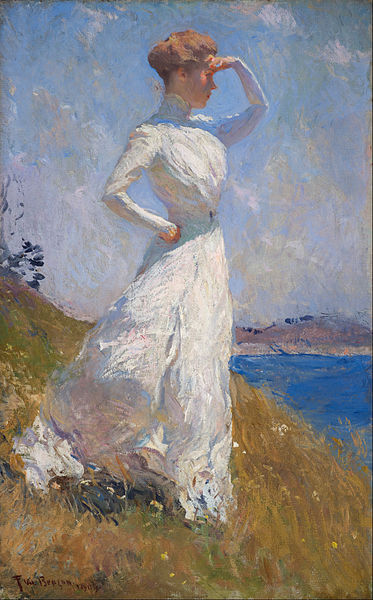
'Sunlight' by Frank Weston Benson 1909. Painting of woman in white dress looking out to sea.

It wasn’t any deliberate decision on my part, but it’s been almost a year since I’ve posted anything on Memoranda. I’ve been busy with Day Job and various other activities, including starting work on a completely new novel1. I’ve been reading a lot, but each time I sat down to share my opinion of a book, I thought, ‘Does anyone need to know this? Why would they care what I think? The author of this bestselling book is doing just fine without my recommendation.’ And then I’d wander off to do something else.

I’m not certain what I’ll be doing with Memoranda this year, but I’d like to keep it going, if only because it’s the closest thing I have to a social media presence now that BookTwitter is dead. Where are all the readers, authors, publishers and agents now? Facebook? Instagram? TikTok? None of those options appeals to me. Am I meant to join Bluesky? I do have an account at Substack so I can read posts there, but have zero interest in posting my own Substack pieces. Readers and writers—where are you hanging out now?

Anyway, while I’m figuring this out (and also to remind myself of how WordPress works), this month I’ll be re-posting a blog series written back in 2012 when I was Writer in Residence at Inside A Dog, the website of the Melbourne-based Centre for Youth Literature. Sadly, the Centre for Youth Literature was shut down five years ago after it lost government funding, which meant the demise of not just Inside A Dog and its archives, but The Inky Youth Literature Awards and Reading Matters, an excellent biennial conference that hosted YA authors from all over the world. This blog series was written when The FitzOsbornes at War was released in Australia and it’s aimed at teenage readers, a behind-the-scenes look at writing historical fiction. Unfortunately, I can’t re-post all of the great discussion that appeared in the comments of the original posts, but feel free to add your own comments.

Next: How to write a historical novel in seven easy steps

  1. I’m not going to talk about this yet, because I don’t want to jinx it. But it’s been an absolute joy to work on so far.