What I’ve Been Reading: Novels by Women

'The Gathering' by Anne Enright

The Gathering by Anne Enright was an engrossing novel about a dysfunctional Irish Catholic family and specifically, about the terrible consequences of covering up abusive behaviour. It was often frustrating to read because the narrator was so unreliable – how can we hope for justice when we can’t be sure of the truth? – but this is entirely consistent with how a child’s memory of trauma works. The back-and-forth timeline was effective, if occasionally confusing, and the prose was visceral and vivid. It gave me nightmares, but I’m glad I read it and I think it was a worthy winner of the Booker Prize.

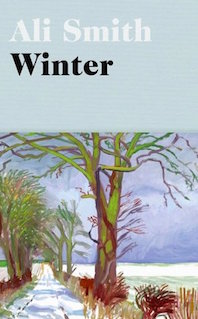
'Winter' by Ali Smith

Winter by Ali Smith was even more confusing, but provided a more pleasant reading experience. It’s a meandering, whimsical piece of writing about an elderly woman who is being followed around her Cornish mansion by a disembodied head. Sophia and Head then find themselves hosting some unwelcome family guests at Christmas. It’s not a conventional narrative, but it’s often very funny and the author has a lot of thoughtful things to say about politics, art, feminism, climate change, family relationships, social media and much, much more. I was struck by how contemporary this book was – it was published last year and contains references not just to Brexit, but Trump’s speech to the Boy Scouts, the Grenfell Tower fire and the refugee crisis in the Mediterranean.

'Clock Dance' by Anne Tyler

I don’t think Clock Dance by Anne Tyler is her best novel, but it’s enjoyable and thoughtful and ultimately satisfying in a way I didn’t expect. Much like Ladder of Years, it’s the story of a middle-aged woman with a horrible husband and unappreciative offspring, who travels to a new community where she makes friends and is valued for her kindness and home-making abilities. It has a few too many self-consciously quirky Baltimore characters and is a little too willing to avoid some dark topics, but I liked it very much.

'Bluebottle' by Belinda Castles

Finally, Bluebottle by Belinda Castles was an intriguing read. It’s another dysfunctional-family-forced-to-confront-past-trauma story (Are there any happy families in novels? Would there be any point in writing about them?), but this one is set in the northern beach suburbs of Sydney and contains some beautifully vivid descriptions of the sea and beach. The cover suggests it’s a thriller, but while there is tension in the narrative, it builds slowly and the Big Revelation is not exactly a surprise. I was more interested in the skillful depiction of some believably flawed characters doing their best to cope with a terrible situation. (Although I do think the author let Tricia off too lightly. I despised Tricia.)

‘Dr Huxley’s Bequest’ Shortlisted for Young People’s History Prize

Dr Huxley’s Bequest has been shortlisted for the Young People’s History Prize in the 2018 NSW Premier’s History Awards. The other shortlisted books are The Fighting Stingrays by Simon Mitchell and Marvellous Miss May: Queen of the Circus by Stephanie Owen Reeder, both of which look fascinating.

'The Fighting Stingrays' by Simon Mitchell

'Marvellous Miss May' by Stephanie Owen Reeder

Dr Huxley’s Bequest has also been added to the NSW Premier’s Reading Challenge list for Years 7-9. There’s a good list of STEM (Science, Technology, Engineering and Maths) book recommendations for students in Years 3-9 here.

Plus, National Science Week starts tomorrow and Children’s Book Week is the week after that and then it’s History Week. SO MUCH EXCITEMENT!

If you’ve enjoyed Memoranda’s Antonia Forest discussions …

If you’ve enjoyed the Antonia Forest discussions at Memoranda, you might also be interested in these posts about twentieth century children’s books.

'The Years of Grace', edited by Noel StreatfeildI was entertained and educated by The Years of Grace (1950), edited by Noel Streatfeild. As the jacket states,

The Years of Grace is a book for growing-up girls who are too old for children’s books and are just beginning to read adult literature. It is a difficult age – difficult for parents and friends, but more difficult for the girls themselves. What are they going to do when they leave school? How should they dress? What is a good hobby? How can they make the right sort of friends? The problems are endless, and here in The Years of Grace is to be found the wisdom of many of our greatest writers and most distinguished people of our time.”

Noel Streatfeild must have realised that there was a lucrative market for this sort of thing, because she followed this up with Growing Up Gracefully in 1955. This guide to good manners for young people includes chapters on ‘Manners Abroad’, ‘When and When Not To Make A Fuss’ and ‘Don’t Drop That Brick or The Gentle Art of Avoiding Solecisms’ and it is even more amusing than her first etiquette guide.

'Friday's Tunnel' by John Verney

Readers who enjoy children’s adventure books may be interested in discussions about Swallows and Amazons by Arthur Ransome, Emil and the Detectives by Erich Kästner and Friday’s Tunnel by John Verney.

'T.H. White: A Biography' by Sylvia Townsend Warner

Finally, here are some links to blog posts about the biographies of children’s writers T. H. White and Dodie Smith.

‘Peter’s Room’, Part Seven

Chapter Eleven: The Dispatch is Delivered

One last bit of Gondalling, in which they finally arrive in Angora. Again, the plot doesn’t make much sense. Jason goes straight to the King because “the matter is of deepest urgency”, but when they meet, Jason doesn’t say a word about the evil Regent’s plots. Instead, he has a nice meal, then when he leaves, Rupert hands over the forged document and claims that he escaped before the Gaaldines could torture him. Rupert goes back to join the other Guards and is horrified to realise they’re about to go and meet the Angoran King, so Rupert’s treachery will soon be revealed. He must quickly kill Jason and escape to Gaaldine, although he wonders whether he’ll be safe there.

This is the point where Ginty says “Let’s get up and act this properly”, suggesting that sometimes their Gondalling was sitting and talking, and sometimes they acted it out.

Rupert/Patrick goes to kill Jason/Lawrie, who is shocked at Rupert’s betrayal but tells Rupert to “shoot me quickly and make your getaway” (in a way that Lawrie would never do). But just as Rupert is about to fire, the others rush in, now aware of Rupert’s treachery. Jason says Rupert must be taken home and tried as a traitor, which means he will burn at the stake. Rupert urges the others to shoot him now, but Malise/Peter says he couldn’t do that, indicating his broken arm from the battle (and Peter actually has a broken collarbone now, so the Gondalling foretold that) and Nicholas/Nicola says Rupert/Patrick deserves to burn (for Rosina, the geese and not caring when she fell off Buster). Rupert announces he will shoot himself and the children break out of Gondalling to discuss this.

Peter says suicide is “too easy” and Nicola wonders how Rupert can do that if he’s Catholic. Ginty wants to save Rupert by sending him into exile “and we could all go into voluntary exile with him”. But Peter thinks Rupert deserves to burn for being a “coward and traitor”. Patrick loses his temper and points out that Malise Marlow, the Civil War ancestor who supported Charles, actually betrayed his own side when the Royalists were losing and showed the Parliamentarians how to get into the Royalist castle. And then Patrick’s Royalist ancestor, Anthony Merrick, was captured and shot.

“There was a moment’s violent silence, loud with old betrayals and antique feuds and ancient enmities. And then Nicola said, ‘Lumme, what a heel!’ and the long dead things went back to their own place. Peter, very pale, said nothing.”

Then Patrick raises an actual pistol to his head to shoot himself, Nicola is frightened to see he’s wearing his Rupert face and, “panic-stricken”, bashes his wrist with the actual sword she’s carrying. The pistol falls and discharges, shooting a hole in the window beside Lawrie’s head and nearly hitting Rowan, who’s outside in the spinney. Because of course, when Peter checked the old pistols were safe, he didn’t do it properly. Didn’t I say that Peter and guns should never be allowed in the same place? Everyone hastily re-arranges the scene so that when Rowan arrives, they all look completely innocent, the pistol having fallen off the wall accidentally (although Lawrie is “quietly bleeding to death into her trousers pocket”). Rowan is not convinced, but can’t prove anything and at least she takes all the guns away. I’m just remembering when Peter was carrying around a pistol earlier, in case they met the neighbourhood drunk, and he playfully held it to Nicola’s head – imagine if it had gone off then. He’s so irresponsible!

Nicola, thoroughly fed up, announces she’s leaving Gondal, despite Lawrie saying she can’t, they need her and it’s “four to one”:

“I don’t care if it’s a billion to a quarter,” said Nicola, discarding family democracy at the same time as she put on her macintosh. “I think the whole thing’s quite mad. And I think those Brontës of Gin’s must have been absolutely mental, still doing it when they were thirty, nearly!”

Then Peter, who never wants to hear the word ‘Malise’ again in his life, banishes the others from the Hide. He takes the Malise paper and farm journals and “stuffed the whole thing away at the very bottom, underneath everything”, which is exactly how Peter always responds to trauma. Then he ponders how everything in the Hide transmogrified itself:

“The sovereigns had become farthings: Malise had turned from hero to villain: even the holiday itself had changed from whatever he’d planned into this Gondal nonsense: whatever Mr. Tranter might say, it did look as if Ted Colthard’s grandfather had–well–you never knew–”

Yes, Peter, let’s put all the blame on the devil on the roof. It couldn’t possibly have gone wrong due to your own character flaws.

Then there’s a nice scene between Nicola and Rowan, in which Rowan is leaning on a gate, “Saying ‘Aarrh’ to the crops. It makes them grow,” and Nicola discusses her plans for the rest of the holidays:

“Then I think I’ll have elevenses and then I’ll get Buster and go for a ride. And tomorrow, if that’s all right with you, I’ll come up to the lambing pen.”

Good for you, Nicola. And I hope the rest of your holidays are much better than the first bit.

Lawrie blames everyone else, but she’ll be fine, Gondalling away by herself in her bedroom. Patrick and Ginty are the most upset by the abrupt end of Gondal. Ginty says, “You could sort of find out how people feel when things happen to them, couldn’t you?”, which is what fiction does and suggests Antonia Forest isn’t completely against Gondalling. And Patrick says:

“I wish we could have gone on long enough to find out [what Rupert decided] … once we really got going, what was happening to Rupert felt much more important than anything that was happening to me … we could have gone back to before all this happened and seen why Rupert got like this … Anyway, it was much more fun being Rupert than me.”

So Gondalling did seem to have a psychological benefit for Patrick – it allowed him to consider how other people thought and felt, which is not something he seems to have done before this. After all, the only real danger they faced from Gondalling was due to Peter’s irresponsible attitude to guns. A winter holiday of escapism is not going to cause much harm to most children.

Ginty and Patrick are very sad that “from now on ordinary everyday life will have to serve”, but I don’t have too much sympathy for them, because they both have youth, good health, good looks, lots of money, servants and their very own ponies. And the book concludes with Patrick suggesting, “Let’s get The Idiot and Catkin and go for a ride.”

THE END

I can absolutely see why Victoria University has chosen Peter’s Room as a set text for their children’s literature course. Apart from being an enjoyable read, there’s so much to explore within the text, especially about the role of fantasy and fiction in children’s (and adults’) lives.

My personal favourite bits were the discussion about the Brontës, the talk Rowan and Nicola had about careers, and the scene with Nicola, Buster and the fox. I found the Gondal bits fairly tedious. I can see why they had to be there, but did they have to be so badly written and clumsily plotted? Of course, the children were ‘writing’ those bits and wouldn’t be expected to be brilliant at it, but I wondered if the clumsy prose reflected Antonia Forest’s opinion of High Fantasy. Did she like Lord of the Rings and Narnia and those sorts of books? I’d guess not from this book. I also got the impression that despite her stern warning about the dangers of Gondalling, she’d had a fair bit of daydreaming experience herself. And after all, she lived inside the imaginary world of the Marlows for decades.

The next Marlow book is The Thuggery Affair. Oh dear. Perhaps it’s not as bad as it sounds…

‘Peter’s Room’ by Antonia Forest
‘Peter’s Room’, Part Two
‘Peter’s Room’, Part Three
‘Peter’s Room’, Part Four
‘Peter’s Room’, Part Five
‘Peter’s Room’, Part Six

‘Peter’s Room’, Part Six

Chapter Ten: Hounds are Running

My entire knowledge of fox hunting with hounds comes from watching Paradise Postponed and Brideshead Revisited, so I am just going to assume Antonia Forest has done her research and that this chapter is an accurate description of one of the peculiar things that the English upper classes do to entertain themselves (or used to do, as I think it’s illegal in England now). Mrs Marlow leaves it until the morning of the hunt (at breakfast, while having “an unusually early cigarette”) to explain the rules. Karen and Ann, the sensible ones, are mere spectators and Ann asks why the others do it, when it makes them nervous. “To see how one makes out, I suppose. It’s like Mount Everest. It’s there,” says Rowan off-handedly (Rowan is fearless and brave). Rowan is also the only one to notice how depressed Nicola is, but is too busy to investigate further. Then Mrs Marlow comes downstairs looking like this:

Caricature of Elizabeth the Empress of Austria. Published in Vanity Fair, 5 April 1884.

“I’ve never ridden anything else out hunting,” she explains airily as her children gape at her. “Your grandmother couldn’t abide breeches on women, so it was a question of riding side-saddle or being told how appalling one looked from behind four times a week.”

Lumme! I think Mrs Marlow ‘married beneath her’ when she wed that young sailor who wasn’t even expected to inherit any property.

Mrs Merrick, when they reach the stables, turns out to be far less enamoured of posh horsey activities than her husband or son, and gratefully hands over the Major’s “hot as ginger” chestnut to Rowan. Ronnie, the handsome Merrick cousin, offers to ride the chestnut instead of Rowan, but “both Rowan and Nicola understood instantly that this was the last thing Ronnie wanted”, so Rowan, of course, says she’ll do it. Because she’s so used to sacrificing her own well-being and comfort to make men’s lives easier.

Nicola goes to get Buster and finds Patrick having a meltdown because they might be late. His state of mind is not helped by his father serving drinks to Mrs Marlow and Ronnie. Then they all ride to the Meet, where the grown-ups go to the pub for a few more drinks. Keep in mind they were all up till two am drinking at the party. No wonder people are always falling off horses during hunts and breaking their limbs and necks. I notice seventeen-year-old Rowan is in the pub as well. Still, if she’s old enough to drive a car, run a farm and parent her young siblings, I guess she’s old enough to drink in a pub.

Meanwhile, Buster, usually very placid and dull, is very excited about being back with his “darling hounds” after three years away from hunting and Nicola is having trouble controlling him. Her worry about this is exacerbated by everyone joking about “Buster the Thruster” being back and indeed, Buster is “so larky and self-willed” that once the hounds catch scent of a fox, Nicola has to do all she can just to stay in the saddle. The others are Gondalling away and Lawrie uses the excuse of being King to use the gate instead of jumping the wall. Patrick and Ginty jump without hesitation, Peter grimly follows them (“because he was Malise”) and Nicola is alarmed to see she is “being carried irresistibly towards the wall”. Go Buster! He not only jumps every wall and hedge he can find, he bounds over an enormous ditch with a thirty-foot drop. Patrick is astonished when the rest of the Field catch up with Nicola and Buster:

“No one’s jumped the Cut since the Master’s grandfather did it on Bandsman …

Nicola forebore to say that for one thing she’d had no idea what she was jumping and for another Buster had given her no option and went on munching smugly at her sandwich.”

Good for you, Nicola!

Lawrie’s hired horse soon goes “lame” and Lawrie sulks all the way back to the stables, whereupon the clever horse makes a miraculous recovery and Lawrie walks home inventing excuses and slipping “into the delicious comfort of being Jason”. Then Peter’s “fraying courage” snaps completely and his horse, “unsettled by her rider’s uncertainty, catching the infection of his fright”, stops dead, throws him off and he breaks his collar bone. Despite the pain, he’s relieved that now he won’t have to hunt any more this season and he considers that by next season, he’ll be “months braver than now”. You go on thinking that, Peter…

Finally Buster, brave but tired, clips a wall going over and Nicola falls off. Patrick, right behind, nearly lands on top of her but carries on with only a glance back. Nicola is

“shaken less by the fall than by Patrick’s Rupert face looking back. Even if he had been Rupert jumping, once he had nearly jumped on her he ought to have turned into Patrick again.”

I think this is meant to be another example of the dangers of Gondalling, but it’s probably just Patrick being Patrick. He’s never shown much sympathy before when Nicola or anyone else has fallen off a horse. Mind you, he isn’t even concerned about poor Buster on his knees in the mud and technically, Buster is Patrick’s pony.

Then there’s a really lovely bit of writing, when Nicola walks Buster home and realises the fox that everyone is supposed to be hunting is actually walking along beside her, using her scent and Buster’s scent to throw off the hounds. But three of the hounds are tracking the fox and they’ve nearly caught up:

“She felt curiously neutral. If she did not want to see Charles James, so clever, so resourceful, caught at the last, neither did she want to see the white hounds, so tenacious, so resolute, disappointed.”

In the end, there’s a frantic dash up the hill as the exhausted fox races for home and the three hounds chase after him. Afterwards, the hounds return with no sign of blood, so I’m choosing to believe the fox made it to safety because there’s been enough dead animals in this book already. And then Buster takes Nicola home in the moonlight and she finally arrives back in the Merricks’ stableyard, exhausted, unable to move, half-asleep.

Next, Chapter Eleven: The Dispatch is Delivered