Here are the books I read this year that I loved the most.
But first, some statistics!
I read 72 books this year, plus approximately 7,853 articles in scientific journals (this last number may be a slight exaggeration). I’m sure you really, really want to see some pie charts about the books I read, so here you go:

I read lots more children’s books this year than I usually do.

Hmm, that is not very diverse, is it? I only read three books that had been translated into English, too.

That’s probably typical of my reading habits. It’s not that I deliberately try to read more women writers than men, it simply works out that way most years.
Now for my favourites.
My favourite children’s books
 I absolutely loved Saffy’s Angel by Hilary McKay, which I have previously written about here. I also liked Amelia Dee and the Peacock Lamp by Odo Hirsch, a sweet, charming story about a girl who is inspired to write stories by a mysterious brass lamp she finds in her house. This has many of the usual elements of an Odo Hirsch book (eccentric but benevolent parents, a carefully multicultural cast of characters, a vaguely European setting), but I found Amelia especially endearing and the lessons she learned (that it takes courage to share your thoughts with others; that other people often have complex motivations for their actions; that unchecked anger harms yourself, not just others) were exactly what I needed to think about at the time.
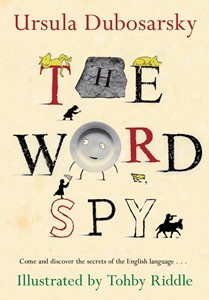
Other books I enjoyed included The Word Spy, an entertaining non-fiction book about the history of the English language, written by Ursula Dubosarsky and illustrated by Tohby Riddle, and Al Capone Shines My Shoes by Gennifer Choldenko, about a boy whose father is a guard at Alcatraz Prison in 1935.
My favourite Young Adult novel
This year I read quite a few YA books that had received plenty of acclaim, but I ended up feeling underwhelmed by a lot of them. I could certainly understand why the books had been praised, but they just weren’t my cup of tea. Sometimes they had beautiful sentence-level writing, but the voice seemed implausible for the teenager who was supposed to be narrating the story. Sometimes they had a great narrator and fascinating premise, but the structure of the novel didn’t work for me. One book I’d seen described as ‘feminist’ was . . . really, really not feminist at all. Maybe my expectations had been raised too high by the hype. Anyway, my favourite YA book of 2012 turned out to be a book first published in 1910, long before the concept of ‘Young Adult literature’ existed. The book was The Getting of Wisdom, by Henry Handel Richardson, which I’ve previously written about here.
My favourite novels for adults
 I found At Last by Edward St Aubyn quite as harrowing as I’d expected, but also hopeful and consoling and unexpectedly funny. It’s the fifth in a series of novels about Patrick Melrose, who was born into a wealthy, aristocratic family and was then subjected to appalling childhood abuse and neglect by his parents. In this book, Patrick has finally overcome his drug and alcohol addictions and is trying to cope with his marriage breakdown, when his mother dies. The novel is elegantly structured around her funeral, allowing a lot of thoughtful commentary on the nature of death, forgiveness and free will, but also some hilarious descriptions of the idle rich. Patrick’s awful relatives and family friends are mostly ‘old money’ who’ve never worked a day in their lives, but complain constantly about how difficult their existence is. I know this all sounds very grim and this book certainly isn’t for everyone, but I thought it was fascinating and beautifully written.
I also enjoyed Insignificant Others by Stephen McCauley and The Beginner’s Goodbye by Anne Tyler, which I’ve previously written about here. I’m currently halfway through Restoration by Rose Tremain and loving it, so I suspect this book will make it onto my 2012 favourites list, too.
My favourite non-fiction for adults
I read some terrific biographies this year, including A. A. Milne: His Life by Ann Thwaite and Rosalind Franklin: The Dark Lady of DNA by Brenda Maddox. I wrote about both books here. I also enjoyed Alex and Me, by Irene M. Pepperberg, about a very smart parrot.
I will not bore you with my To Read list for 2013, especially as it contains approximately 2,147 scientific articles that I didn’t get around to reading this year (this number may be a slight exaggeration).
Hope you all have a happy and peaceful holiday season, and that 2013 brings you lots of great reading.
More favourite books:
1. Favourite Books of 2010
2. Favourite Books of 2011
_____