I picked up this biography with great enthusiasm, but found, on the very first page, this description of Valerie Grove, the biographer, reading I Capture the Castle:
“Like so many readers before me, I was captured from the opening sentence: ‘I am writing this sitting in the kitchen sink.'”
Grrr! It’s “I write this sitting in the kitchen sink”, one of the most famous opening lines in modern English literature, and a person who can’t see or hear the difference between those two sentences probably should not be writing books at all, let alone writing biographies of Dodie Smith. However, I pressed on and found that the biographer seemed to have done a very thorough job of investigating Dodie’s life – assisted by the millions of words Dodie wrote about herself in her journals, her letters to her friends and her multiple volumes of autobiography.
 Dear Dodie contains detailed descriptions of Dodie as a spoilt only child surrounded by doting older relatives in a wealthy, theatre-loving Victorian family; of the deaths of both her parents by the time she was eighteen; and of the years she spent as an unsuccessful actress in the 1920s, before she gave up and got a job at Heal’s, the London department store. Dodie was “not temperamentally suited to the shopgirl’s humdrum life of clocking in from nine to six”, but as she was having an affair with the (married) owner of the store, she knew she was unlikely to be sacked, despite her tardiness and temper tantrums (she once “flung one of [the] assistants, a heavy girl, across the china department”). She then had enormous critical and commercial success in the 1930s as a playwright, before being “forced” into exile in the United States during the war, so that her younger husband Alec could avoid conscription.
Dodie seems to have hated America, even though she managed to make quite a lot of money writing screenplays in Hollywood. When she and Alec finally returned to England in 1953, it was to a country that was no longer interested in her cosy plays set in rich people’s drawing rooms, and she never again had much success as a playwright. Her first novel, though, was I Capture the Castle, an international bestseller, which was followed by even greater commercial success with her children’s book, The Hundred and One Dalmatians, which was subsequently made into a beloved Disney film.
But did this make Dodie happy? No. She complained bitterly about any less-than-gushing book reviews and was outraged when the play of I Capture the Castle was not sufficiently appreciated by critics or audiences. She spent money extravagantly, then moaned about how impoverished she was. She was fiercely critical of all her friends and acquaintances, and in later life, preferred to avoid people altogether. Animals, particularly dogs, were her passion, although she took this to extremes – for example, feeding mice and rats in her country cottage, until the kitchen was “carpeted with mice” and the lawn “alive” with rats. (Mind you, her love of animals didn’t prevent her from eating meat or wearing fur coats.) She became increasingly peevish and obsessive about her routines, and was indignant when her husband died, because he was supposed to look after her till her death:
“As Christopher Reynolds-Jones [her cousin] tells, Dodie telephoned him and he asked her how she was. ‘Oh, I’ve had a terrible morning,’ said Dodie. ‘My breakfast didn’t arrive, so I went along to see what was happening and found Alec dead.'”
It seems to me that this biographer didn’t actually like Dodie much, which must have made writing the book a bit of a struggle:
“[Dodie’s] life was essentially limited and, to a degree, pampered. Though she had to struggle in her actress days, even at her poorest she never cooked herself a meal, and even as a ‘shopgirl’ there was always someone to wake her and fetch her breakfast. After her mother’s death, she never had to look after anyone – husband, children or aged parents; and she was nannied by her husband for fifty years. A writer who has no family, no responsibility for other people, nobody to consider but himself and his own work (and there have been legions of such writers, most of them men) lives a peculiarly privileged and self-indulgent life.”
The biographer also feels, for some reason, that we need constant reminders of how Dodie was “plain”, “unbeautiful”, “ugly”, “witchlike” and “dwarfish” (she was five feet tall, only an inch shorter than I am, and she looks like a perfectly normal middle-aged woman in most of the photos). Perhaps this is relevant when explaining Dodie’s failure to become a leading stage actress, but what does it have to do with the rest of her life? Do we really need to be told that Dodie dressed up for the opening night of one of her plays, “although elegance was hard to achieve, for a woman five foot high . . .”?
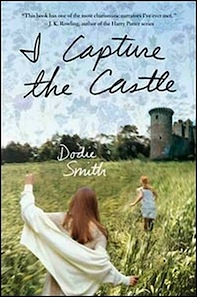 On the other hand, the biographer acknowledges that Dodie worked extremely hard and was intelligent, witty, resolute, spirited and highly perceptive. Dodie could be very generous to those she liked, and she had fascinating friendships with other writers, including Christopher Isherwood and Julian Barnes – and, of course, she wrote some wonderful books. My favourite part of this biography was about the process of writing I Capture the Castle. The castle setting was borrowed from the autobiography of Margot Asquith, who’d grown up with her sister in a remote Scottish castle, where they’d walked on the turrets at midnight and kept their clothes hanging in a tower. Mortmain’s book, Jacob Wrestling, was meant to be a fictional version of Joyce’s Ulysses. Cassandra, originally called Sophia, was a younger version of Dodie (although Ambrose Heal, her former lover, claimed Dodie was Topaz). In the US, the Literary Guild ordered more than half a million copies before publication, but asked her to make Cassandra kinder to Stephen, which she did. Dodie was astonished when they said they would have preferred Cassandra to marry Stephen, but was “relieved to be allowed to keep the ending ambivalent: she wanted readers to finish the book hoping that Cassandra would marry Simon.”
Fans of I Capture the Castle, then, will find much of interest in this book, and dog lovers will enjoy the amusing anecdotes about Dodie’s own Dalmatians. Dear Dodie is well-researched and provides a clear, chronological account of the life of a very successful writer. Just don’t expect to feel very fond of Dodie by the end of it.

 I loved The Daughter of Time by Josephine Tey, a murder mystery in which a police detective solves a four-hundred-year-old crime while lying immobile in a hospital bed. Alan Grant, with the enthusiastic help of a young American working at the British Museum, examines the facts behind Richard III’s supposed murder of the Princes in the Tower and convincingly argues that the villain was actually . . . well, you’ll have to read it to find out. While I don’t think Richard III was quite as saintly as this author believes, the novel was well researched and fascinating, and I was amused (in a horrified sort of way) by the descriptions of the 1950s hospital setting (for instance, Alan lying in bed and CHAIN-SMOKING). It was especially interesting to read about Richard III, given the recent (disputed)
  Finally, Tea with Arwa: One woman’s story of faith, family and finding a home in Australia by